
 English
 Deutsch
 Español
 Français
 Беларуская

Content
- 1 Breaking Down the Real Operating Cost: Manual vs. Electric
- 2 Maximizing Warehouse Space: Solutions for Narrow Aisles
- 3 Reaching New Heights: The Role of High-Lift Stackers
- 4 Ensuring Longevity: Proactive Maintenance Strategies
- 5 FAQ
- 5.1 How much weight can a manual stacker actually lift?
- 5.2 Can I use an electric pallet stacker outdoors on a slight incline?
- 5.3 What is the typical lifespan of a lithium-ion battery in a pallet stacker?
- 5.4 Do I need special training to operate a manual stacker?
- 5.5 How do I fix a manual stacker that won't lift to full height?
- 6 References
In the modern warehouse, every square meter and every labor hour directly impacts profitability. For logistics managers and procurement specialists, the choice between a Manual Stacker and an Electric Pallet Stacker is a fundamental strategic decision. It is not merely about the initial price tag; it is a complex equation involving total cost of ownership, labor efficiency, energy consumption, and long-term operational scalability. This guide provides an engineering-level analysis to help you navigate this decision, ensuring your investment aligns with both current material handling demands and future growth trajectories.
Breaking Down the Real Operating Cost: Manual vs. Electric
The most critical factor for B2B buyers is the total cost of ownership (TCO). While a Manual Stacker offers a lower barrier to entry, an Electric Pallet Stacker often presents superior long-term value in dynamic environments. The comparison extends beyond the purchase invoice to include labor, energy, maintenance, and productivity metrics.
The Hidden Expenses of a Manual Stacker
At first glance, the Manual Stacker appears to be the clear winner in cost savings due to the absence of expensive batteries and electric motors. However, a deeper analysis of operational workflows reveals significant indirect costs associated with manual equipment.
- Labor Fatigue and Throughput Limits: A Manual Stacker relies on hydraulic pumps operated by human effort. In applications requiring frequent lifts to heights near 3 meters, operator fatigue sets in quickly. This physiological limit caps throughput and introduces variability in cycle times. Studies in labor economics indicate that fatigued workers are less productive and have higher turnover rates, adding to recruitment and training costs.
- Maintenance Simplicity of Manual Hydraulic Systems: The mechanical simplicity of a Manual Stacker is a distinct advantage. Maintenance is generally limited to hydraulic fluid checks, lubrication of pivot points, and wheel replacements. There are no complex electronic controllers or battery management systems to fail, making it a robust choice for low-intensity, intermittent use.
- Opportunity Cost of Slow Handling: Speed is a commodity. A manual unit moves at the pace of the operator walking and pumping. In a busy warehouse, this slower handling can create bottlenecks, effectively capping the facility's output.
Calculating the ROI of an Electric Pallet Stacker
Investing in an Electric Pallet Stacker transforms material handling from a physical task into a precision-driven process. The return on investment is realized through dramatic gains in efficiency and dramatic reductions in labor strain.
- Energy Efficiency and Modern Battery Technology: The shift to lithium-ion batteries has revolutionized the electric stacker market. Unlike traditional lead-acid batteries, lithium-ion supports opportunity charging, allowing the stacker to be topped up during breaks without damaging the cells. This ensures the Electric Pallet Stacker is always ready for operation, maximizing uptime. Energy consumption is also minimal; modern electric stackers consume as little as 0.3kW/h per pallet moved, compared to over 2kW/h for traditional counterbalanced forklifts.
- Advanced Drive Technology Reducing Downtime: Modern electric stackers feature maintenance-free AC drive motors and regenerative braking systems. These systems not only extend brake life by recovering energy but also reduce the mechanical wear associated with stopping and starting, directly impacting the manual stacker vs electric stacker operating cost analysis in favor of electric for high-volume applications.
The table below provides a quantitative comparison of the cost factors discussed.
| Cost Factor | Manual Stacker | Electric Pallet Stacker |
| Typical Initial Investment | $1,000 - $3,000 | $3,000 - $10,000+ |
| Primary Energy Source | Human hydraulic pump (zero direct energy cost) | Lithium-ion / Lead-Acid battery (low cost per cycle) |
| Labor Impact | High physical strain; limits throughput | Minimal strain; operator controls speed and lift electronically |
| Maintenance Scope | Hydraulic fluid, seals, and mechanical pivot points | Battery management, motors, controllers, hydraulics |
Maximizing Warehouse Space: Solutions for Narrow Aisles
Maximizing storage density is a primary goal for modern logistics. The physical dimensions of your handling equipment directly dictate the width of your aisles. An electric pallet stacker for narrow aisle warehouse configurations is specifically engineered to reclaim valuable floor space by reducing turning radii.
Why Width Matters: The Challenge of High-Density Storage
Every inch of aisle space is a trade-off against storage capacity. Standard counterbalanced trucks require wide aisles to maneuver, which can waste up to 50% of available floor space. Specialized stacker designs solve this problem by integrating the load within the wheelbase or using stabilizing legs.
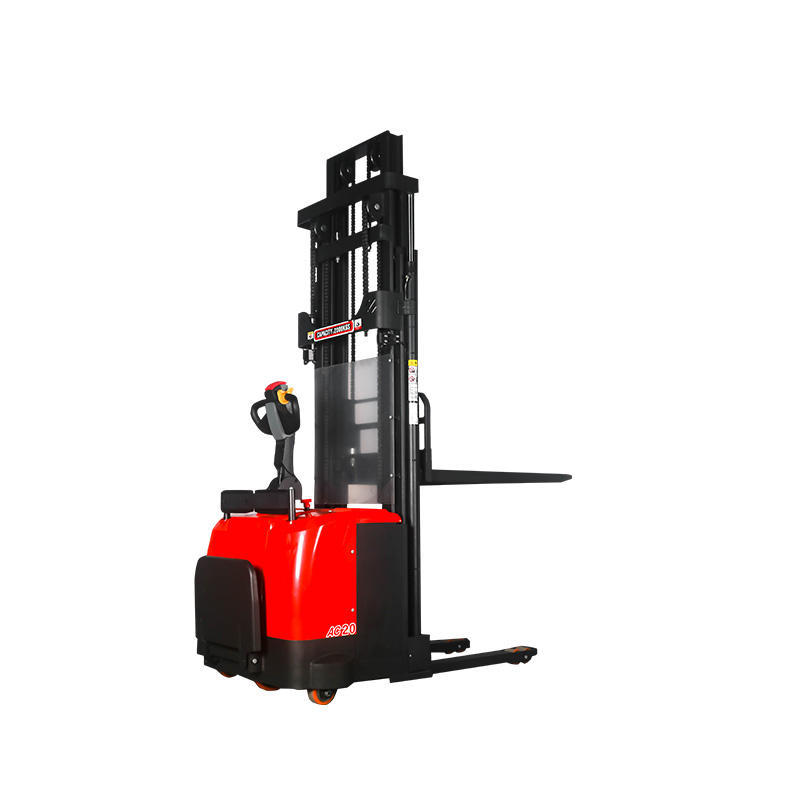
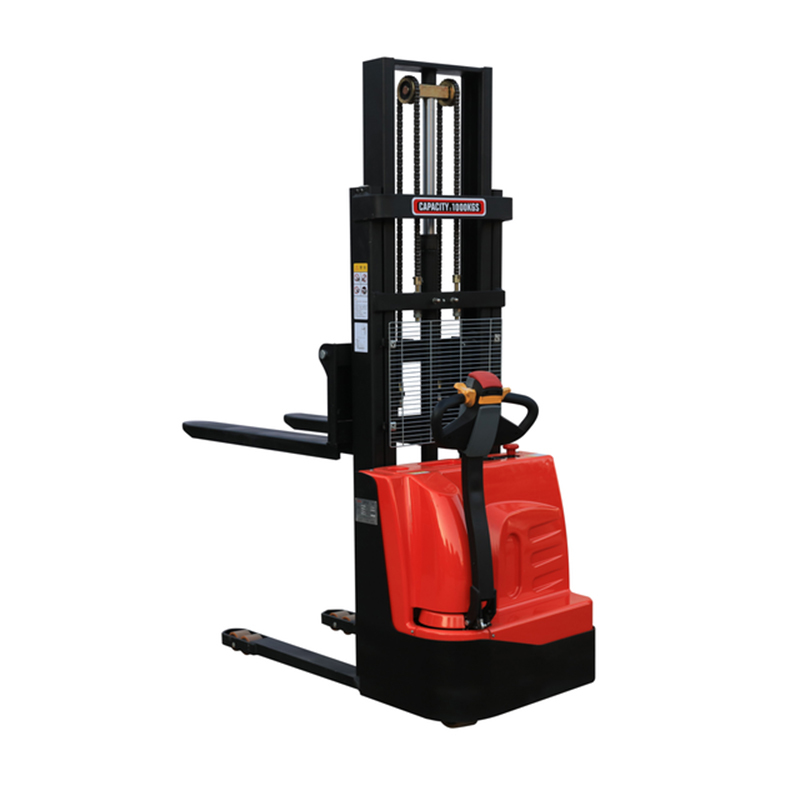
- Straddle Stackers: These units feature legs that straddle the bottom pallet. This design eliminates the need for a large counterweight, allowing the truck to work in very narrow aisles. However, they are best suited for handling uniform pallets where the legs can fit beneath the load.
- Reach Stackers (Walkie/Rider): For even higher density, reach trucks allow the forks to extend out to retrieve a pallet while the outriggers remain stationary. This reduces the required aisle width to the absolute minimum, maximizing vertical storage utilization.
Turning Radius and Chassis Design
The engineering behind a narrow-aisle stacker focuses on the chassis and steering geometry. A compact chassis with a short front end allows the drive wheel to turn sharply beneath the load. For instance, some award-winning designs feature an extremely short front chassis that enables operation in spaces as tight as shipping containers. This maneuverability is critical for facilities that need to perform precise stacking in high-density racking systems.
Reaching New Heights: The Role of High-Lift Stackers
As warehouses expand vertically to utilize cubic volume, the demands on stackers increase. The term high lift manual stacker 3 meter represents the upper threshold of manual operation and the entry point where electric power becomes a necessity.
Manual Stacking at Height: Capabilities and Limits
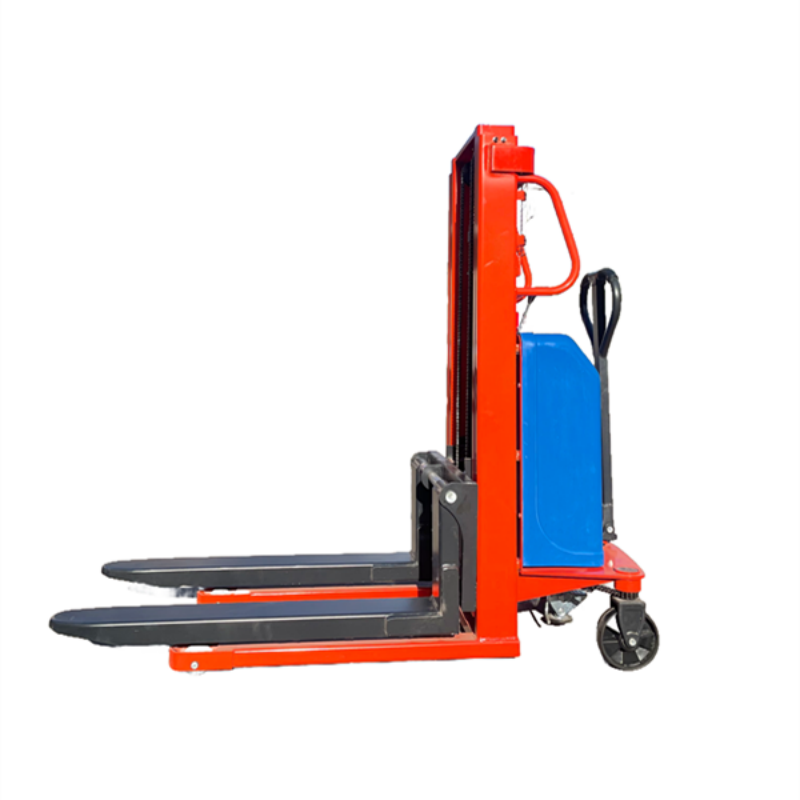
A high lift manual stacker 3 meter is an engineering marvel of mechanical advantage, using hydraulic systems to lift a ton of material to significant heights. However, the physics involved present operational limits.
- Hydraulic Efficiency in High-Lift Applications: Lifting a 1,000 kg load to 3,000 mm requires substantial hydraulic pressure. While well-maintained systems can achieve this, the number of pump strokes required increases significantly with height. This increases cycle time and operator exertion. Furthermore, stability at full extension is critical; a robust C-type steel mast and reinforced dual chains are essential to prevent load sway and ensure safety at maximum altitude.
- Visibility and Precision: At 3 meters, the operator's view of the forks and the racking beam can be obscured. Manual control requires significant skill to align the pallet accurately.
When to Upgrade to Electric for High-Bay Storage
When lift heights consistently exceed 3 meters, or when the frequency of high lifts increases, an Electric Pallet Stacker becomes the only viable option. Electric models offer proportional lifting controls, allowing operators to inch the forks into place with millimeter precision using a thumb wheel or lever, which is impossible with the on/off nature of a manual hydraulic release. This precision reduces product damage and increases placement speed.
Ensuring Longevity: Proactive Maintenance Strategies
Regardless of the power source, a stacker is a capital asset that requires care. Adhering to a strict manual stacker maintenance checklist or electric counterpart ensures safety, reliability, and maximum return on investment.
The Essential Manual Stacker Maintenance Checklist
For manual units, the focus is on the integrity of the hydraulic circuit and mechanical structure. A structured maintenance routine prevents minor issues from becoming major failures.
- Daily Visual Inspection: Check for oil leaks around the pump and cylinder. Inspect wheels for embedded debris or flat spots. Ensure the piston rod is clean and free of rust or scoring, as scratches can destroy hydraulic seals.
- Hydraulic System Care: If the forks drift down under load, it indicates internal leakage. This often requires replacing the seal ring on the piston or cleaning the one-way valve of debris. If the forks won't reach full height, it could be low oil or air in the system. Bleeding the system by pumping with the release valve open solves the latter.
- Lubrication and Fasteners: Monthly, apply grease to chains and pivot points. Check all bolts and nuts for tightness, as vibrations can loosen structural connections over time.
Maintaining Peak Performance in Electric Models
Electric Pallet Stacker maintenance adds layers of complexity related to the electrical and battery systems, but also offers predictive insights.
- Battery Maintenance (Lithium-Ion vs. Lead-Acid): Lithium-ion batteries are largely maintenance-free, requiring no watering and no equalization charges. Lead-acid batteries, however, need regular watering and cleaning to prevent corrosion. Always follow the manufacturer's charging profile to maximize cycle life .
- Controller and Motor Diagnostics: Modern stackers utilize CAN bus systems. Technicians can plug into the system to read fault codes and performance data, diagnosing issues like a failing motor controller before it fails completely.
- Brake System Checks: Electric stackers often use electromagnetic brakes that engage when the tiller is released. Ensure these are adjusted correctly and that the friction surfaces are clean to guarantee safe stopping distances.
FAQ
How much weight can a manual stacker actually lift?
Standard industrial Manual Stacker models typically have a rated load capacity of 1,000 kg to 2,000 kg. However, this capacity is rated at a specific load center, usually 500 mm or 600 mm from the fork face. As the lift height increases, the stability triangle shrinks, and the effective safe working load may decrease. It is critical to never exceed the rated capacity specified on the data plate, as overloading can lead to hydraulic system failure or catastrophic tipping.
Can I use an electric pallet stacker outdoors on a slight incline?
Standard Electric Pallet Stacker units with polyurethane tires are designed for smooth, flat, indoor surfaces. Using them outdoors on wet or uneven ground poses a serious safety risk. However, specialized models are available for outdoor use. These features include pneumatic or cushion tires for better traction and higher ingress protection (IP) ratings to shield electrical components from moisture and dust. If your application requires ramp operation, look for models with enhanced gradeability ratings and regenerative braking to control descent.
What is the typical lifespan of a lithium-ion battery in a pallet stacker?
A high-quality lithium-ion battery in an Electric Pallet Stacker typically endures 2,000 to 3,000 charge cycles. In a single-shift operation with opportunity charging, this translates to a service life of approximately 5 to 7 years. This is significantly longer than lead-acid batteries, which usually last 500 to 1,500 cycles. The advanced battery management system (BMS) in lithium packs prevents damage from overcharging or deep discharging, contributing to this extended lifespan.
Do I need special training to operate a manual stacker?
While a Manual Stacker does not require a driver's license, it absolutely requires proper training. Operators must understand the principles of load stability, how to correctly position the forks, and the dangers of overhead obstructions. Training should cover the specific manual stacker maintenance checklist items, such as pre-use inspections for hydraulic leaks and wheel damage. Untrained operators are more likely to overload the unit, use it on uneven surfaces, or bypass safety mechanisms, leading to accidents.
How do I fix a manual stacker that won't lift to full height?
This is a common issue usually related to the hydraulic system. The first step is to check the hydraulic oil level; low fluid means the pump cannot generate enough volume to fully extend the cylinder. If the fluid level is correct, the problem is likely air trapped in the system. You can usually bleed the air by opening the release valve and pumping the handle rapidly several times, then closing the valve and trying to lift again. If this fails, there may be a blockage in the oil inlet valve or a damaged pump piston seal requiring professional service.
References
- Meenyon. (2025). Manual vs. Electric Pallet Stackers: Cost Comparison & ROI Analysis. [online] Available at: meenyon.com [Accessed 19 Mar. 2026].
- Warehouse & Logistics News. (2025). Hyster® durable design for simple stacking. [online] Available at: warehousenews.co.uk [Accessed 19 Mar. 2026].
- Xilin. (2026). How to Troubleshoot Common Malfunctions of the Manual Stacker? [online] Available at: xilin.com [Accessed 19 Mar. 2026].
- Red Dot Design Award. (2026). SKINNY POWER. [online] Available at: red-dot.org [Accessed 19 Mar. 2026].
- AJ Products. (2026). Manual stacker, 1000 kg load, 85-3000 mm lift height. [online] Available at: ajproducts.co.uk [Accessed 19 Mar. 2026].
- Redway Battery. (2025). How Do Pallet Stackers Offer Cost-Efficient Logistics Solutions? [online] Available at: redwaybattery.com [Accessed 19 Mar. 2026].
- Industrial Vehicle Technology International. (2025). Hyster launches new lithium-ion battery-powered pallet stacker. [online] Available at: ivtinternational.com [Accessed 19 Mar. 2026].
- Torry Carrier. (2025). Simple Maintenance Tips to Extend Your Manual Stacker‘s Life. [online] Available at: torycarrier.com [Accessed 19 Mar. 2026].
- Linde Material Handling. (2025). L14 - L16 AS/AS AP. [online] Available at: linde-mh.com [Accessed 19 Mar. 2026].
- Sinolift. (2026). SFH22AG Manual Hydraulic Stacker with Adjustable Straddle Legs. [online] Available at: sinoliftforklifts.com [Accessed 19 Mar. 2026].