
 English
 Deutsch
 Español
 Français
 Беларуская

Content
- 1 What is a Manual Pallet Truck?
- 2 Key Features of Manual Pallet Trucks
- 3 Manual Pallet Trucks in the Market – Trends and Developments
- 4 Choosing the Right Manual Pallet Truck for Your Business
- 5 Pros and Cons of Manual Pallet Trucks
- 6 Maintenance and Care for Manual Pallet Trucks
- 7 Product Recommendations and Buying Tips
- 8 FAQ
- 9 Conclusion
In modern warehouses, logistics centers, and industrial settings, manual pallet trucks have long been essential tools. Despite the rise of automated equipment and electric forklifts, manual pallet trucks remain a staple in many operations due to their simplicity, reliability, and cost-effectiveness. These handy devices are used to move heavy pallets with minimal effort, making them crucial in improving efficiency and reducing physical strain for workers.
What is a Manual Pallet Truck?
Definition and Basic Functionality
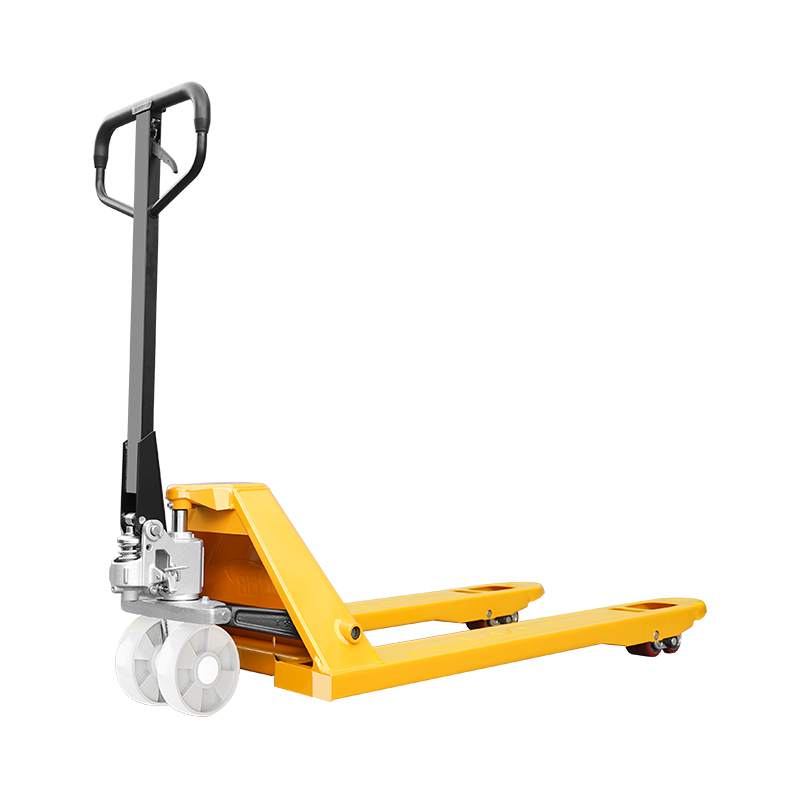
A manual pallet truck, also known as a hand pallet jack or pump truck, is a non-motorized device used to lift and move palletized goods. The truck is equipped with a hydraulic pump system that allows operators to manually lift pallets by pumping the handle. These trucks are typically designed with two forks that slide under a pallet, enabling the load to be lifted and moved with minimal physical effort.
Unlike forklifts, manual pallet trucks are powered solely by human effort. The operator pushes or pulls the truck to transport goods over short distances, making them ideal for use in smaller warehouses, retail spaces, and environments where electric-powered options are unnecessary or impractical.
Key components of a manual pallet truck include:
- Hydraulic pump system for lifting and lowering pallets
- Forks that slide under the pallet
- Steering wheels and load wheels for maneuverability
- Handle for steering and controlling the lift
How Does a Manual Pallet Truck Work?
The operation of a manual pallet truck is relatively straightforward. Here’s a step-by-step breakdown of how it works:
- Positioning the forks: The operator slides the forks underneath the pallet by lowering them using the hydraulic handle.
- Lifting the pallet: By repeatedly pumping the handle, hydraulic pressure is created, which lifts the forks and the pallet.
- Maneuvering the truck: Once the pallet is lifted, the operator can push or pull the truck to transport the pallet to a new location.
- Lowering the load: When the pallet is in position, the operator gently lowers the forks by releasing the hydraulic handle, allowing the pallet to rest securely on the floor.
Key Features of Manual Pallet Trucks
Manual pallet trucks come in various models, each offering different features designed to meet specific needs. Understanding these features is crucial for selecting the right model for your business.
Load Capacity and Use Cases
Manual pallet trucks are available in a range of load capacities, typically ranging from 1,000 kg (2,200 lbs) to 3,000 kg (6,600 lbs). The load capacity determines the maximum weight the pallet truck can safely lift and carry.
- Light-duty models: These trucks typically handle loads of up to 1,500 kg (3,300 lbs) and are ideal for small warehouses or retail operations with moderate material handling needs.
- Medium-duty models: With a load capacity of around 2,500 kg (5,500 lbs), these trucks are commonly used in industries with a higher volume of goods, such as distribution centers and manufacturing.
- Heavy-duty models: These trucks are designed to support up to 3,000 kg (6,600 lbs) or more and are used in environments where heavy, bulky loads need to be moved, such as in construction, heavy industry, and large warehouses.
Hydraulic Lift and Features
Hydraulic technology is the heart of manual pallet trucks. The hydraulic lift allows operators to easily raise and lower heavy loads. Manual pallet trucks are designed with a hydraulic pump system that uses fluid pressure to create lift.
- Lift height: The typical lift height for a manual pallet truck ranges between 80 mm and 200 mm. However, low-profile models are designed for use with pallets that have lower clearance.
- Fork dimensions: Forks are typically 1150 mm long, with varying widths. Longer forks allow for more stable handling of larger pallets, while narrower forks are useful in tighter spaces.
- Ergonomic handle: Some models feature an ergonomic handle, which reduces operator strain and improves ease of use. Handles can be horizontal, vertical, or curved, depending on the truck’s design.
Material and Durability
Manual pallet trucks are generally made of high-strength steel or alloy materials for durability and long-lasting performance. The frame and forks are reinforced to withstand heavy loads and frequent use. The wheels are often made of polyurethane or rubber, ensuring smooth movement and reduced wear on floors.
- Polyurethane wheels: These wheels offer excellent durability and are quieter than rubber, making them ideal for use in environments where noise is a concern.
- Rubber wheels: Rubber wheels are more shock-absorbing and can handle rougher surfaces, making them suitable for environments where the floor is uneven.
Manual Pallet Trucks in the Market – Trends and Developments
Market Demand
The global demand for manual pallet trucks continues to rise due to the increasing need for efficient material handling equipment in warehouses, distribution centers, and retail spaces. With the rise of e-commerce and online shopping, logistics companies are investing heavily in improving their material handling processes. Manual pallet trucks are often the first choice for businesses looking for a cost-effective solution to move goods without investing in more expensive electric forklifts.
Industries Driving the Demand:
- E-commerce: The growth of online shopping requires efficient warehouse operations, boosting the demand for manual pallet trucks.
- Manufacturing: Manual pallet trucks are essential for moving materials within manufacturing plants, particularly in industries like automotive, electronics, and food processing.
- Retail: Retail operations often rely on manual pallet trucks to restock shelves and move goods from receiving areas to the sales floor.
Technological Innovations
Recent advancements in hydraulic systems, material design, and safety features have made manual pallet trucks more efficient and user-friendly. Innovations include:
- Advanced hydraulic pumps that provide smoother, faster lifts.
- Ergonomic designs that reduce operator fatigue and enhance productivity.
- Safety features such as automatic brakes that engage when the handle is released, preventing accidents and ensuring the truck stays in place when not in use.
Choosing the Right Manual Pallet Truck for Your Business
Selecting the right manual pallet truck depends on a variety of factors, including your specific load requirements, the environment in which the truck will be used, and the amount of space available.
Determining Load Requirements
To choose the right pallet truck, first determine the weight of the heaviest load you need to lift. It’s essential to choose a truck that can handle more than the maximum weight you plan to lift to ensure safe operation and avoid overloading the truck.
Space Considerations
The available space in your warehouse or facility plays a critical role in choosing the right pallet truck. Narrow aisles and limited space require compact models that are easy to maneuver. Some manual pallet trucks are designed with shorter forks or a tight turning radius, making them suitable for confined spaces.
- Narrow aisle models: These trucks are ideal for smaller operations where space is limited and can easily maneuver between tight shelving units or racks.
- Long fork models: If you are handling larger pallets, look for trucks with longer forks to ensure stability.
Safety Features
Safety is paramount when using manual pallet trucks. Some advanced models are equipped with features that enhance operator safety:
- Automatic braking systems: These ensure the truck stays in place when the handle is released, preventing it from rolling away.
- Non-slip handles: Many models include ergonomic, anti-slip handles that improve grip and reduce fatigue during operation.
- Load indicators: Some trucks have built-in load indicators that show when the truck is near its maximum load capacity.
Pros and Cons of Manual Pallet Trucks
Advantages
- Cost-Effective: Manual pallet trucks are much more affordable than electric forklifts, making them a great choice for small and medium-sized businesses.
- Ease of Use: These trucks are simple to operate and require minimal training.
- Versatility: They are suitable for a wide range of environments, from small retail stores to large warehouses.
Disadvantages
- Manual Labor: Although easy to use, manual pallet trucks still require physical effort from
the operator, which can become tiring during long shifts.
- Limited Lift Height: Manual pallet trucks are not suitable for lifting items to very high shelves, making them less versatile than powered forklifts.
Maintenance and Care for Manual Pallet Trucks
Proper maintenance is crucial for ensuring the longevity and safe operation of your manual pallet truck.
Regular Maintenance Tasks
- Lubrication: Regularly lubricate the hydraulic system and the moving parts of the truck, including the wheels and fork pivots.
- Check for wear and tear: Inspect the forks, wheels, and hydraulic system for any signs of damage or excessive wear.
- Fluid checks: Make sure the hydraulic fluid levels are adequate to maintain optimal lifting performance.
Troubleshooting Common Issues
- Lifting failure: If the truck is struggling to lift, check for low hydraulic fluid or air in the hydraulic system. Top up the fluid or bleed the system if necessary.
- Uneven or hard steering: If the truck is difficult to steer, inspect the wheels for debris or damage and ensure they are properly aligned.
Product Recommendations and Buying Tips
Top Manual Pallet Truck Models
Below are some of the top manual pallet trucks available in the market today:
| Product Name | Max Load Capacity | Lift Height | Fork Dimensions | Best For | Features |
|---|---|---|---|---|---|
| Heavy Duty Manual Pallet Truck | 3000 kg | 200 mm | 1150 mm x 540 mm | Heavy-duty use | High load capacity, durable |
| Compact Manual Pallet Truck | 1500 kg | 150 mm | 1000 mm x 500 mm | Small warehouses | Compact design, easy to maneuver |
| Hydraulic Manual Pallet Truck | 2500 kg | 190 mm | 1200 mm x 600 mm | General use | Smooth hydraulic lift |
| Low Profile Pallet Truck | 2000 kg | 80 mm | 1100 mm x 550 mm | Low-profile areas | Ideal for low-clearance pallets |
Tips for Selecting the Right Model
- Consider the load capacity: Always select a pallet truck that can safely handle the heaviest load you’ll be moving.
- Look for ergonomic features: Features like non-slip handles and ergonomic grips can help reduce operator fatigue.
- Check for warranties: A good warranty ensures that you’re covered for repairs and maintenance over the life of the truck.
FAQ
1. What is a manual pallet truck?
A manual pallet truck is a hand-operated device used for lifting and transporting palletized goods using hydraulic power.
2. How does a manual pallet truck compare to an electric forklift?
Manual pallet trucks require human effort for operation, while electric forklifts are powered by batteries and require less manual input.
3. What maintenance is required for a manual pallet truck?
Regular lubrication of the hydraulic pump, wheel inspections, and hydraulic fluid checks are essential to keep the pallet truck functioning smoothly.
4. Can a manual pallet truck lift heavy loads?
Yes, heavy-duty models can handle loads up to 3,000 kg (6,600 lbs) or more.
Conclusion
Manual pallet trucks remain one of the most essential tools for material handling in warehouses and industrial settings. With their affordability, ease of use, and versatility, they offer an efficient solution for transporting goods, even in tight or confined spaces. By considering factors such as load capacity, ergonomic design, and safety features, businesses can ensure they select the ideal manual pallet truck for their needs.
Through proper maintenance and regular inspections, manual pallet trucks can provide years of reliable service, making them a worthy investment for any operation.