
 English
 Deutsch
 Español
 Français
 Беларуская

Content
- 1 1. Basic Concept of Weighing Scale Pallet Truck
- 2 2. Key Application Scenarios
- 2.1 2.1 Industrial Production Workshop Handling (Industrial Pallet Truck)
- 2.2 2.2 Core Tool for Warehouse Equipment (Warehouse Equipment)
- 2.3 2.3 Accurate Weighing for Logistics Needs (Weight Measurement Truck)
- 2.4 2.4 Efficient Material Handling in Logistics (Logistics Material Handling)
- 2.5 2.5 Safety Assurance for Heavy Material Handling (Heavy Duty Pallet Jack)
- 3 3. Guidelines for Selecting a Weighing Scale Pallet Truck
- 4 4. Usage Tips for Weighing Scale Pallet Truck
- 5 5. Maintenance and Care for Weighing Scale Pallet Truck
- 6 6. Strategies to Improve Warehouse Efficiency
- 7 7. Conclusion
In modern industry and logistics, warehouse management and material handling efficiency directly affect operational costs and productivity. As companies expand and warehouse needs diversify, traditional handling tools often fail to meet requirements for efficiency, safety, and precision. Therefore, the Weighing Scale Pallet Truck has emerged as an essential professional tool in warehouse and logistics settings. It not only performs the functions of a traditional pallet truck but also measures weight during handling, significantly improving operational efficiency and management accuracy.
1. Basic Concept of Weighing Scale Pallet Truck
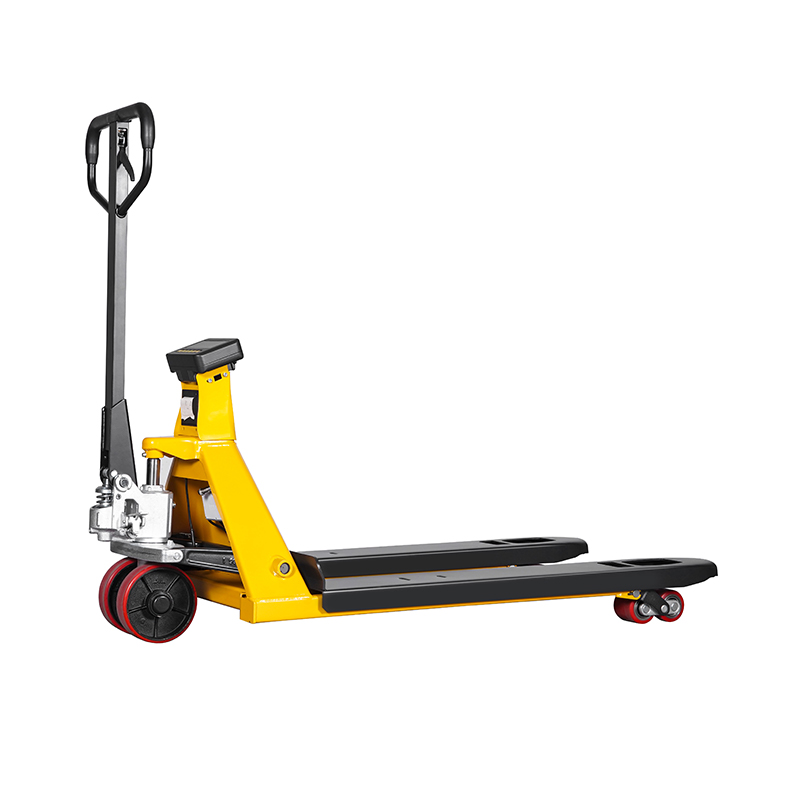
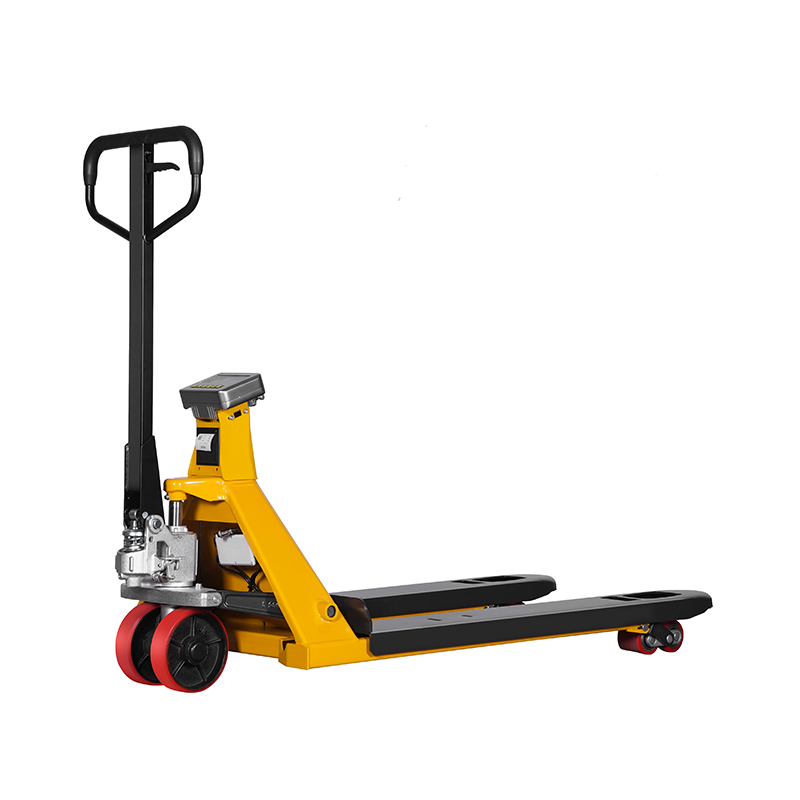
The Weighing Scale Pallet Truck is a multifunctional pallet truck integrating both handling and weighing capabilities, specifically designed for warehouses, factories, and logistics centres. Its main advantage lies in its ability to measure the weight of goods during transportation, reducing repeated weighing steps, improving operational efficiency, and minimising human error. Compared to ordinary pallet trucks, it provides real-time weight monitoring, enabling data-driven management, which is crucial for modern logistics and warehouse operations.
This equipment is typically made of high-strength steel, offering high load capacity, structural stability, and wear resistance. It features a precise weighing system, capable of measuring to the kilogram or even finer units, suitable for handling and weighing various heavy materials. For companies, the Weighing Scale Pallet Truck is not just a handling tool but a critical asset for enhancing warehouse management intelligence.
2. Key Application Scenarios
The Weighing Scale Pallet Truck is widely applicable across industrial and logistics settings. The following scenarios highlight its value:
2.1 Industrial Production Workshop Handling (Industrial Pallet Truck)
In industrial production workshops, material handling is frequent and varies greatly in weight. Traditional pallet trucks can transport goods, but cannot monitor weight in real-time, leading to errors or overloads. The Weighing Scale Pallet Truck enables weighing during handling, allowing companies to track material weight accurately, reduce human errors, and minimise the risk of equipment damage from overloading. This equipment is particularly suitable for machinery manufacturing, metal processing, and construction material industries.
2.2 Core Tool for Warehouse Equipment (Warehouse Equipment)
Modern warehouses demand high handling efficiency and precise inventory management. As an integral part of warehouse equipment, the Weighing Scale Pallet Truck provides real-time weight records, assisting warehouse managers during inbound, outbound, and stocktaking operations. Compared to traditional warehouse tools, it reduces repetitive weighing and handling operations, significantly enhancing warehouse efficiency.
2.3 Accurate Weighing for Logistics Needs (Weight Measurement Truck)
In logistics centres, accurate weight measurement directly affects shipping costs and safety. Especially for cross-border logistics or weight-based charging models, weighing errors can result in financial losses. The Weighing Scale Pallet Truck integrates a precise weighing system to enable simultaneous transport and weighing, ensuring every shipment is accurately measured before transportation. This functionality is particularly valuable for industries requiring strict weight control, such as the food, chemical, and pharmaceutical sectors.
2.4 Efficient Material Handling in Logistics (Logistics Material Handling)
The logistics industry prioritises speed and efficiency. Material handling often involves multiple steps, and separate weighing at each step can reduce efficiency. The Weighing Scale Pallet Truck allows simultaneous handling and weighing, streamlining workflows. This not only improves operational efficiency but also enables data-driven logistics management, facilitating subsequent transport scheduling and cost accounting.
2.5 Safety Assurance for Heavy Material Handling (Heavy Duty Pallet Jack)
For heavy material handling, safety is critical. The Weighing Scale Pallet Truck features a heavy-duty design and high load capacity, easily handling large quantities of goods while monitoring load weight to prevent overloads and equipment damage. It is not only a handling tool but also a safety safeguard during operations.
3. Guidelines for Selecting a Weighing Scale Pallet Truck
Selecting the right Weighing Scale Pallet Truck is crucial for operational efficiency. Key considerations include:
3.1 Load Capacity and Size Selection
The truck's load capacity determines the types of goods it can handle. Companies should match load rating and truck size to material weight, pallet dimensions, and warehouse aisle width. Insufficient capacity can damage the equipment, while overdesign increases procurement costs. Proper matching is essential.
3.2 Weighing Accuracy and Standards
Weighing accuracy is a core metric of the Weighing Scale Pallet Truck. Different industries require different precision levels. For example, pharmaceuticals and food require high accuracy, while construction materials can tolerate lower precision. Ensure the weighing system complies with national or industry standards and schedule regular calibration for reliable long-term performance.
3.3 Material and Durability
Truck material affects longevity and reliability. High-strength steel or alloy materials withstand heavy loads and resist corrosion and wear. Wheel and bearing quality also impacts handling smoothness and durability, making material selection crucial.
3.4 Operational Convenience and Safety
Ease of operation impacts productivity. The Weighing Scale Pallet Truck should have ergonomic handles, flexible steering, and a stable braking system. Safety features like non-slip pedals, overload alarms, and emergency stops help reduce accidents and enhance workplace safety.
4. Usage Tips for Weighing Scale Pallet Truck
4.1 Proper Handling Procedures
To use a Weighing Scale Pallet Truck effectively, operators should follow standardised procedures:
- Check equipment status: ensure wheels, brakes, and weighing system are functional before use.
- Position goods: fully insert forks under the pallet to prevent tilting or falling.
- Activate weighing: start the weighing system after the goods are on the truck to record an accurate weight.
- Transport goods: push or pull slowly, avoiding sudden movements to protect equipment and cargo.
- Unload and record data: lower the pallet, record weight data in management systems or manually for tracking.
4.2 Weighing Accuracy Considerations
While the Weighing Scale Pallet Truck excels in weighing, certain factors affect precision:
- Flat surfaces: ensure level ground to prevent measurement errors.
- Balanced placement: distribute goods evenly to avoid skewed readings.
- Minimise vibration: avoid impacts that could damage sensors.
- Regular calibration: maintain long-term measurement accuracy.
4.3 Efficient Handling Techniques
To maximise efficiency:
- Plan transport routes to avoid obstacles and minimise turns.
- Consolidate multiple items on one pallet when possible.
- Use weight data to optimise workflow and minimise reweighing.
- Train operators for proficiency and safe operation.
5. Maintenance and Care for Weighing Scale Pallet Truck
5.1 Daily Inspections
Operators should check:
- Wheels and bearings for smooth operation and wear.
- Weighing sensors and displays for stable readings.
- Hydraulic system for leaks or noise.
- Truck structure for cracks or deformation.
5.2 Regular Maintenance
Monthly or quarterly maintenance should include:
- Cleaning: remove dust and oil from the truck and sensors.
- Lubrication: Apply oil to wheel axles, hydraulics, and moving parts.
- Weighing calibration: use standard weights or manufacturer tools.
- Safety check: ensure brakes, handles, and alarms are functional.
5.3 Troubleshooting
Common issues and solutions:
- Weighing display abnormal: check sensor connections or recalibrate.
- Hydraulic lifting issues: check oil level, remove air or debris, and maintain the pump.
- Wheel obstruction or noise: clear debris, replace worn wheels or bearings.
- Electronic system failure: check battery, consult a professional if necessary.
6. Strategies to Improve Warehouse Efficiency
- Integrate weight data with warehouse management systems for real-time monitoring.
- Optimise storage layout based on weight and turnover data to reduce handling distance.
- Train and assess staff for operational proficiency and efficiency incentives.
- Implement preventive maintenance schedules to avoid downtime.
7. Conclusion
In summary, the Weighing Scale Pallet Truck is an essential tool in modern warehouse logistics, offering:
- Simultaneous handling and weighing: reduces repetitive operations and improves efficiency.
- High accuracy and reliability: meets industrial and logistics needs.
- Enhanced safety: heavy-duty design and safety features protect operators.
- Optimised warehouse management: enables precise inventory and workflow management.
- Versatility: suitable for factories, warehouses, and logistics centres.
By selecting the right model, standardizing operation, performing routine maintenance, and optimising management strategies, companies can fully leverage the Weighing Scale Pallet Truck to achieve efficient, safe, and accurate warehouse logistics.