
 English
 Deutsch
 Español
 Français
 Беларуская

Content
- 1 Material Advantages of Stainless Steel Pallet Trucks
- 2 Key Structural Components and Design Features
- 3 Main Application Scenarios
- 4 Comparison Between Stainless Steel and Standard Pallet Trucks
- 5 Daily Maintenance and Care Guidelines
- 6 Selection Criteria for Stainless Steel Pallet Trucks
- 7 Operational Safety Specifications
- 8 Long-Term Value and Economic Benefits
- 9 Summary of Stainless Steel Pallet Truck Core Value
The definitive conclusion for stainless steel pallet trucks is that they are the most reliable, hygienic, and long-lasting material handling equipment for corrosive, wet, high-sanitary, and demanding industrial environments. Unlike standard steel or plastic pallet trucks, they resist rust, chemical damage, and bacterial growth, delivering consistent performance with minimal maintenance over an extended service life.
This type of pallet truck is not a universal choice for all handling scenarios, but it becomes an irreplaceable solution when working conditions involve moisture, cleaning chemicals, food contact, pharmaceutical production, or corrosive substances. Its core value lies in balancing operational efficiency, equipment durability, and environmental compliance, which directly reduces long-term replacement and maintenance costs for enterprises.
Material Advantages of Stainless Steel Pallet Trucks
Stainless steel is the foundational material that defines the performance of stainless steel pallet trucks, and its inherent properties create a clear competitive edge over other materials used in manual handling equipment.
Exceptional Corrosion Resistance
Standard carbon steel pallet trucks begin to rust after short-term exposure to water, steam, or weak acids, which weakens the frame and reduces load-bearing capacity. Stainless steel pallet trucks use 304 or 316-grade stainless steel, which forms a passive oxide film on the surface to block corrosion factors. This feature allows them to work stably in humid warehouses, cold storage rooms, and outdoor open-air environments for years without structural degradation.
Hygienic and Easy-to-Clean Surface
The smooth, non-porous surface of stainless steel prevents the accumulation of dust, oil, food residues, and microorganisms. It can withstand high-temperature washing, high-pressure water jets, and disinfection with alcohol, chlorine-based cleaners, and other sanitizers. This characteristic makes it fully compliant with strict hygiene standards in food processing, beverage production, and pharmaceutical industries.
High Structural Strength and Durability
Stainless steel maintains excellent mechanical properties even in low-temperature and high-humidity environments, with high tensile strength and impact resistance. Professional-grade stainless steel pallet trucks can maintain stable load-bearing performance after thousands of lifting and handling operations, with a service life 2-3 times longer than ordinary steel pallet trucks in harsh environments.
Key Structural Components and Design Features
The overall performance of a stainless steel pallet truck depends on the integrated design of its core components, all of which are optimized to match the characteristics of stainless steel materials and adapt to specialized working environments.
Fully Stainless Steel Frame and Forks
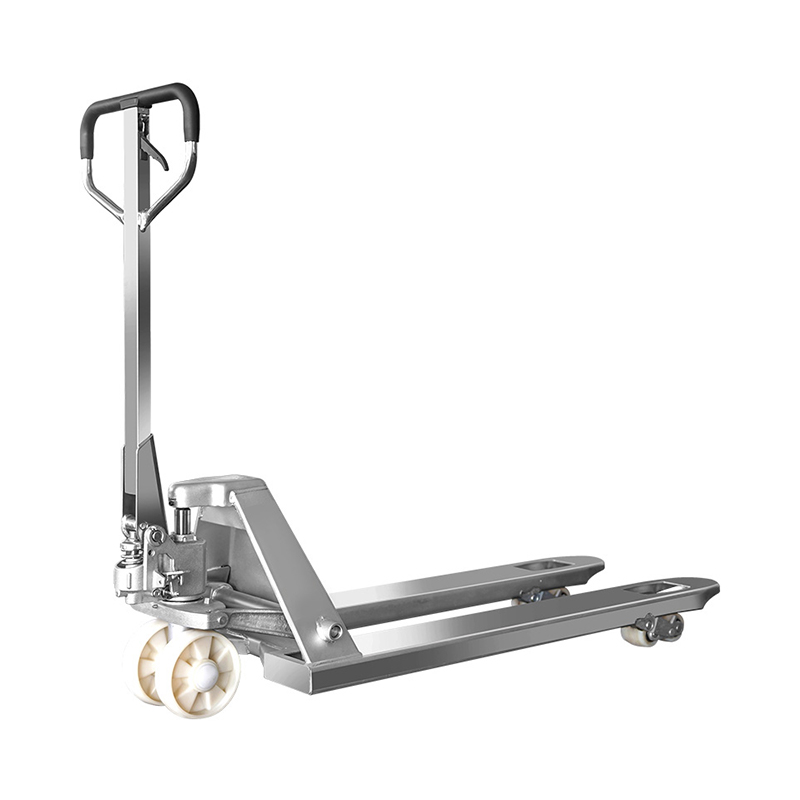
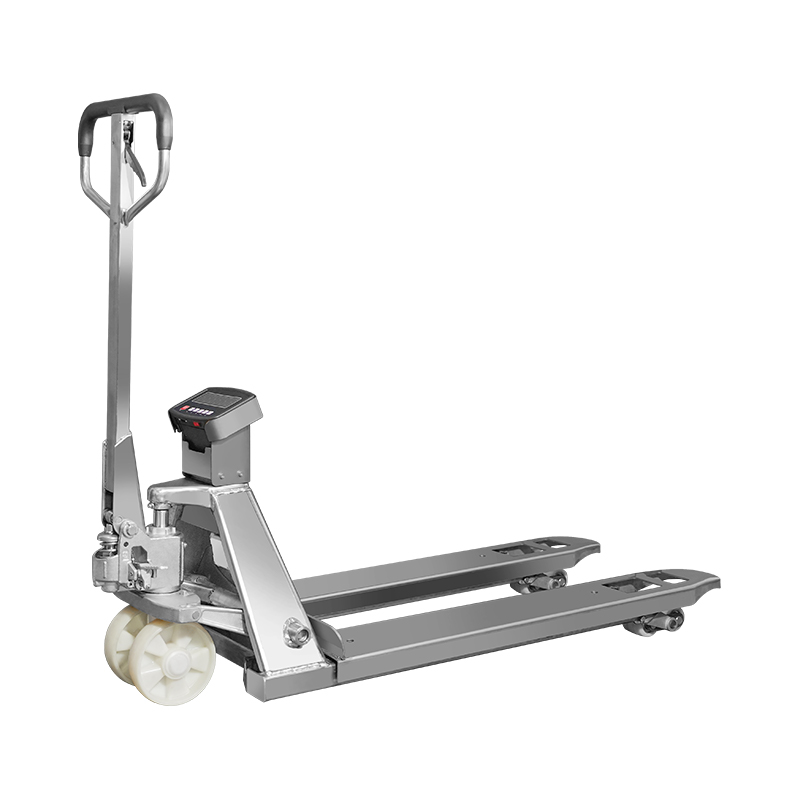
The entire frame, lifting forks, and base of high-quality stainless steel pallet trucks are made of integrated stainless steel, with no mixed carbon steel parts. This design eliminates rust spots caused by material mixing and ensures the overall stability of the equipment. The fork surface is polished smoothly to avoid scratching pallets or packaged goods during transportation.
Hydraulic Pump System
The hydraulic pump is the core power component, and stainless steel models use corrosion-resistant pumps with sealed structures. These pumps prevent water and chemical infiltration, maintain stable lifting pressure, and operate smoothly with low noise. The lifting and lowering actions are controllable, ensuring safe handling of fragile and valuable goods.
Wheels and Casters
Matching wheels are critical for stainless steel pallet trucks. Common configurations include polyurethane, nylon, or rubber wheels, all mounted on stainless steel brackets. These wheels offer good wear resistance, floor protection, and silent operation, while the stainless steel brackets avoid rust and ensure flexible steering even in wet conditions.
Ergonomic Handle Design
The control handle is made of stainless steel with a non-slip grip, designed to reduce operator fatigue during long hours of work. The control buttons are waterproof and corrosion-resistant, supporting one-handed operation for lifting, lowering, and braking functions, improving overall handling efficiency.
Main Application Scenarios
Stainless steel pallet trucks are specialized handling equipment designed for targeted industries and environments, with distinct advantages in scenarios where standard pallet trucks cannot operate reliably.
Food and Beverage Industry
This is the largest application area, including meat processing, dairy production, seafood freezing, beverage filling, and bakery workshops. These environments require frequent cleaning and disinfection, and stainless steel pallet trucks meet food safety standards without rusting or contaminating products. They are widely used in cold storage facilities with temperatures as low as -20°C and maintain stable performance.
Pharmaceutical and Healthcare Industry
Pharmaceutical factories, medical supply warehouses, and laboratory logistics require ultra-clean, sterile handling conditions. Stainless steel pallet trucks do not release particles or harbor bacteria, supporting regular high-temperature and chemical disinfection. They fully comply with GMP hygiene standards and are essential for transporting raw materials, semi-finished products, and finished medical supplies.
Chemical and Corrosive Environments
Chemical plants, cosmetics factories, and cleaning product manufacturing facilities involve acids, alkalis, salts, and organic solvents. Standard pallet trucks corrode rapidly in these settings, but 316-grade stainless steel pallet trucks resist chemical corrosion and ensure operational safety and long service life.
Agricultural and Aquatic Products Logistics
Fruit and vegetable processing bases, aquatic product markets, and slaughterhouses have high humidity and water exposure. Stainless steel pallet trucks are not affected by water immersion or blood contamination, are easy to clean, and avoid odors and bacterial growth caused by material residues.
Outdoor and Coastal Warehouses
Coastal logistics centers and outdoor storage yards have salt spray and high humidity, which accelerate rusting of ordinary steel equipment. Stainless steel pallet trucks resist salt spray corrosion and are ideal for long-term outdoor use with low maintenance requirements.
Comparison Between Stainless Steel and Standard Pallet Trucks
To help enterprises choose suitable handling equipment, we compare stainless steel pallet trucks with standard carbon steel and plastic pallet trucks from multiple practical dimensions. The following table shows the core differences:
| Evaluation Item | Stainless Steel Pallet Truck | Standard Steel Pallet Truck | Plastic Pallet Truck |
|---|---|---|---|
| Corrosion Resistance | Excellent | Poor | Good |
| Hygiene Performance | Highest | Medium | High |
| Load Capacity | High | High | Low |
| Service Life | 5-8 years | 1-3 years | 2-4 years |
| Suitable Environment | Harsh, wet, hygienic | Dry indoor | Light-duty dry |
From the comparison, stainless steel pallet trucks have absolute advantages in harsh environments, while standard steel models are suitable for dry, low-sanitary indoor scenes, and plastic trucks are limited to light-duty handling. Enterprises should prioritize stainless steel models when operating in humid, corrosive, or high-sanitary environments.
Daily Maintenance and Care Guidelines
Although stainless steel pallet trucks have high durability, reasonable daily maintenance can further extend service life, maintain operational efficiency, and reduce failure rates. The maintenance process is simple and does not require complex tools or professional skills.
Regular Cleaning Procedures
After daily use, rinse the surface, forks, and wheels with clean water to remove residues, oil, or chemicals. For food and pharmaceutical scenarios, use neutral disinfectants for wiping and drying with a clean cloth. Avoid using strong acid or alkaline cleaners that may damage the stainless steel surface passivation layer.
Hydraulic System Inspection
Check the hydraulic oil level monthly to ensure it remains within the standard range. If oil leakage is found, tighten the sealing parts or replace seals in time. Avoid overloading operations, as this will shorten the service life of the hydraulic pump and affect lifting stability.
Wheel and Steering Maintenance
Remove debris tangled in wheels weekly to keep rotation flexible. Check wheel wear regularly and replace severely worn wheels to avoid uneven force or damage to the ground. Lubricate steering bearings quarterly to maintain smooth operation.
Storage Recommendations
When not in use for a long time, store the pallet truck in a dry, ventilated area and lower the forks to the ground. Avoid long-term exposure to direct sunlight or heavy rain outdoors, which helps maintain the performance of wheels and hydraulic components.
Selection Criteria for Stainless Steel Pallet Trucks
Choosing the right stainless steel pallet truck requires combining actual working conditions, load requirements, and environmental features. The following core criteria ensure the selected equipment matches operational needs:
Confirm Load-Bearing Requirements
Common load specifications include 2000kg and 2500kg, covering most industrial handling needs. Select the rated load based on the heaviest single pallet weight in daily work, leaving a safety margin instead of using at full load for a long time.
Select Stainless Steel Grade
304 stainless steel is suitable for general humid, food, and pharmaceutical environments; 316 stainless steel is recommended for strong chemical corrosion, coastal salt spray, and high-disinfectant scenarios. The material grade directly affects corrosion resistance and service life.
Match Fork Size and Pallet Specifications
Fork length and width must match commonly used pallets. Standard fork lengths meet most euro and industrial pallets, while custom sizes are available for special pallets. Ensure the fork can fully insert into the pallet to ensure stable lifting.
Wheel Material Selection
Polyurethane wheels are suitable for smooth concrete floors and protect the ground; nylon wheels have better wear resistance for rough ground; rubber wheels offer better grip and silent operation for cold storage and clean rooms.
Prioritize Fully Stainless Steel Structure
Avoid semi-stainless steel models with partial carbon steel parts, as they will rust in harsh environments and reduce overall service life. Choose fully stainless steel frames, pumps, and brackets for maximum reliability.
Operational Safety Specifications
Safe operation is critical to extending equipment life and protecting personnel and goods. Standardized operating procedures reduce accident risks and improve handling efficiency for stainless steel pallet trucks.
- Before operation, check the hydraulic system, wheels, and forks for damage or abnormalities to ensure the equipment is in good condition.
- Do not exceed the rated load capacity, and evenly place goods on the pallet to prevent offset and tipping during transportation.
- Lower the forks to a safe height when moving, and avoid high-speed turning or sudden braking on slippery ground.
- Prohibit passengers from standing on the forks or pallet, and keep a safe distance from slopes, steps, and uneven ground.
- After operation, park the pallet truck in a designated area, lower the forks completely, and clean the equipment as required.
Strictly following safety specifications not only guarantees operational safety but also reduces abnormal wear and tear on the equipment, maintaining stable performance in long-term use.
Long-Term Value and Economic Benefits
While the initial purchase cost of stainless steel pallet trucks is higher than standard models, their long-term economic value is significantly superior, especially in harsh environmental conditions. The core economic benefits come from reduced replacement frequency, lower maintenance costs, and improved operational efficiency.
In high-humidity and corrosive environments, standard pallet trucks need replacement every 1-2 years due to rust and damage, while stainless steel models can be used continuously for 5-8 years with basic maintenance. This reduces equipment replacement costs by more than half over the life cycle. Additionally, their maintenance requirements are minimal, with no need for anti-rust painting or frequent parts replacement, further cutting labor and material costs.
For food, pharmaceutical, and chemical industries, using non-compliant handling equipment may lead to product contamination, safety hazards, and regulatory penalties. Stainless steel pallet trucks fully meet industry hygiene and safety standards, avoiding potential losses and enhancing enterprise product quality and brand reputation.
In terms of operational efficiency, the stable performance and smooth operation of stainless steel pallet trucks reduce downtime caused by equipment failures, ensuring continuous and efficient material handling. This efficiency improvement directly increases overall workflow productivity and brings sustained economic benefits to enterprises.
Summary of Stainless Steel Pallet Truck Core Value
Stainless steel pallet trucks are specialized, high-performance material handling tools with core advantages of corrosion resistance, hygiene, durability, and safety. They are the optimal choice for food, pharmaceutical, chemical, cold storage, coastal logistics, and other demanding environments, solving the pain points of rust, contamination, and short service life of ordinary pallet trucks.
Their value is reflected in long service life, low maintenance costs, compliance with industry standards, and stable operational efficiency. When selecting equipment, enterprises should focus on material grade, load capacity, fork size, and wheel configuration to match actual working conditions. With proper use and maintenance, stainless steel pallet trucks will provide reliable, long-term support for material handling operations and become a cost-effective investment for industrial and commercial logistics systems.