
 English
 Deutsch
 Español
 Français
 Беларуская

Content
- 1 What Is a Lifting Platform Vehicle?
- 2 Lifting Platform Vehicle vs. Forklift vs. Stacker: What's the Difference?
- 3 Main Types of Lifting Platform Vehicles
- 4 How to Choose the Right Lifting Platform Vehicle: Key Parameters
- 5 Safety & Maintenance Tips for Lifting Platform Vehicles
- 6 What to Look for in a Lifting Platform Vehicle Manufacturer
- 7 Conclusion: Choosing the Right Lift for Your Operation
When a warehouse supervisor says they need a "lifting platform vehicle," they often mean one of three very different machines. A purchasing manager searching for this term might be looking at a manual hydraulic truck for occasional maintenance work, an electric platform for an assembly line, or a fixed unit for moving goods between floors. Choosing the wrong type wastes budget and creates daily frustration for operators. This guide explains what these machines actually do, how they differ from forklifts and stackers, and which one fits your specific workflow.
What Is a Lifting Platform Vehicle?
A lifting platform vehicle is a wheeled or fixed piece of material handling equipment designed primarily for vertical movement of loads. Unlike a forklift that drives around carrying loads on forks, this equipment uses a flat platform surface that raises and lowers—usually via hydraulic cylinders, a scissor mechanism, or a mast assembly. The operator positions the platform, loads it manually or with a pallet jack, and uses a foot pump, hand crank, or electric motor to lift the load to the desired working height.
The core components across all types are consistent: a load-bearing platform, a lifting mechanism (scissor arms, vertical mast, or立柱), a drive system (manual pump or electric motor), and controls. Their purpose is focused: eliminate manual lifting at a specific workstation. A typical example is a packing station where workers need to lift a 300 lb drum to table height without straining their backs. Instead of bending and lifting, the operator roles the load onto a platform and raises it to the exact height needed.
Lifting Platform Vehicle vs. Forklift vs. Stacker: What's the Difference?
Many buyers search for "lifting platform vehicle" when they actually need a forklift or a stacker. Understanding the fundamental difference saves money and prevents safety issues. The key distinction lies in movement logic: forklifts and stackers are designed for horizontal transport and pallet handling, while lifting platform vehicles excel at controlled vertical positioning.
| Device Type | Primary Function | Operator Requirement | Workspace Needed | Typical Cost Range |
|---|---|---|---|---|
| Forklift | Horizontal transport + pallet stacking | Licensed driver required | Wide aisles, outdoor areas | Highest |
| Stacker (Pallet Stacker) | Pallet lifting to rack heights | Trained operator | Narrow aisles, indoor use | Medium |
| Lifting Platform Vehicle | Vertical lift for workstations, loading docks | Any worker | Minimal (stationary or small footprint) | Low to Medium |
Use this simple rule of thumb:
- Need to move loads horizontally across a warehouse? Choose a pallet truck or forklift.
- Need to place pallets onto high racks? Choose a stacker or forklift.
- Need to raise a load to a fixed workbench height or load a machine? Choose a lifting platform vehicle.
A lifting platform vehicle is rarely the primary transport tool. Instead, it is a precision instrument for the final vertical move. Its advantages are clear: no license required, safe for narrow spaces, and significantly lower acquisition cost. Many operations use one as a supplement to forklifts—for example, keeping a manual platform truck at a specific work cell so workers don't have to wait for the shared forklift to arrive for a simple lift job.
Main Types of Lifting Platform Vehicles
Within this category, three main configurations dominate the market. Each serves a distinct purpose. As a manufacturer with 20 years of experience, Viilift produces all three types, and understanding their differences helps you match the right tool to your actual workflow. You can watch the full range of these machines in action on the lifting platform vehicle videos page.
Manual Lift Platform Trucks
A manual lift platform truck is the entry-level workhorse. It features a hydraulic foot pump or hand lever that raises the platform mechanically. There is no battery or motor, which makes it lightweight, low-maintenance, and completely independent of electrical outlets. These units typically handle loads up to around 1,000–2,200 lbs, depending on the model.
Where does it shine? In environments where lifting happens occasionally—perhaps a few times per shift. Examples include a repair shop lifting heavy components to bench height, a small retail stockroom raising boxes to counter level, or a facility where electrical supply is unreliable. The trade-off is physical effort: the operator pumps to raise and must control the descent. For high-frequency tasks, this becomes tiring and slows down the workflow.
If your operation fits this profile—light to medium duty, infrequent lifts, budget-conscious—you should view the manual lift platform truck options available.
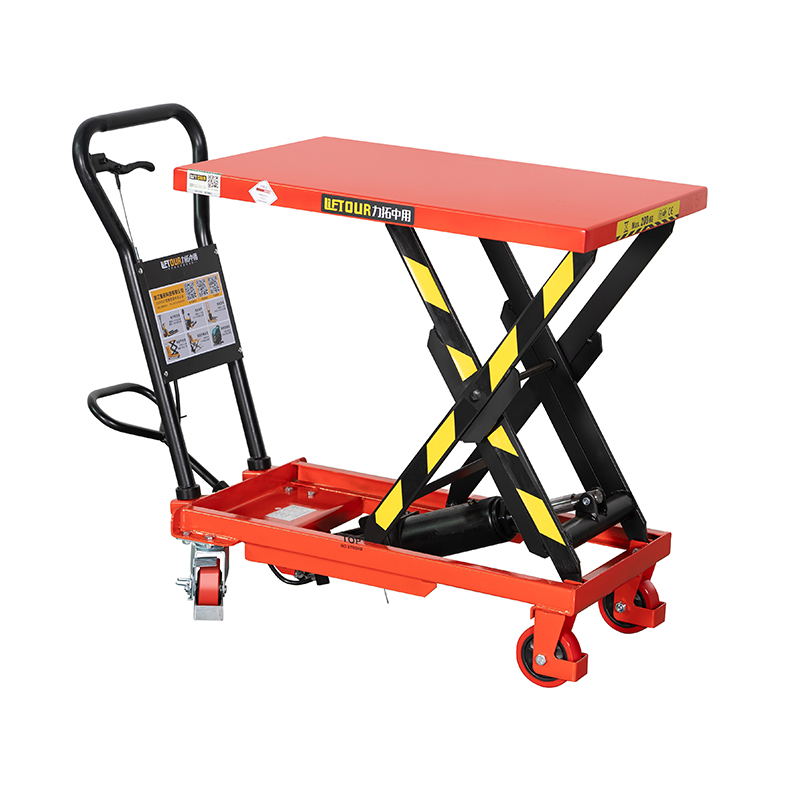 Custom Manual lift platform truck Manufacturer, CompanyHangzhou Viilift Industrial Equipment Co., Ltd. is China Custom Manual lift platform truck Manufacturer and Company,*Load capacity 150kg-...View Product →
Electric Lift Platform Trucks
An electric lift platform truck removes the manual pumping effort entirely. A 12V or 24V motor drives the hydraulic pump, and the operator simply presses a button to raise or lower the platform. This transforms the machine's capability in high-frequency applications.
The impact on productivity is substantial. In a busy e-commerce packing station where orders are processed continuously, a manual pump would add fatigue and slow down the entire line. An electric unit allows the operator to adjust height in seconds, reducing strain and increasing throughput. These trucks typically handle similar load ranges to manual units but add speed, precision, and ergonomic comfort.
For operations in warehousing, logistics, and assembly lines where lifts happen constantly, the electric version is the correct choice. The return on investment comes through reduced labor fatigue and faster cycle times. You can explore the Viilift electric lift platform truck to see specifications for high-efficiency environments.
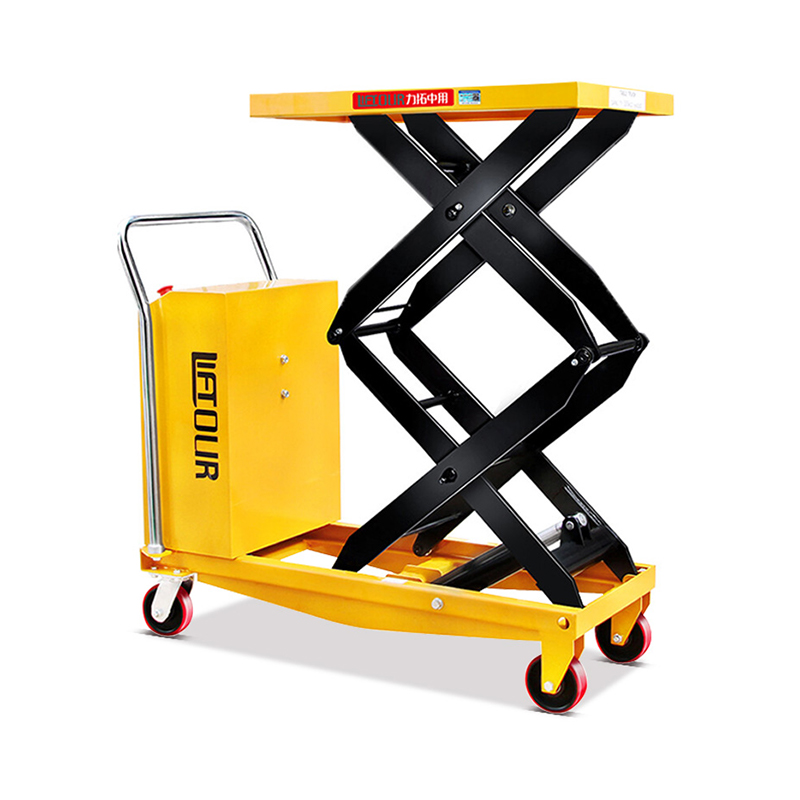 Custom Electric lift platform truck Manufacturer, CompanyHangzhou Viilift Industrial Equipment Co., Ltd. is China Custom Electric lift platform truck Manufacturer and Company,*Electric control l...View Product →
Fixed Lift Platforms
A fixed lift platform is permanently installed at a specific location, often recessed into the floor or mounted on a concrete pit. These are heavy-duty devices built for one critical job: moving goods vertically between two fixed levels. Common applications include transferring inventory from a ground floor to a mezzanine level, loading machines from an elevated platform, or connecting different production lines at various heights.
Unlike their mobile counterparts, fixed platforms are not moved around. They typically feature larger platform sizes and higher load capacities, and they are engineered for continuous, high-cycle operation. Installation requires planning—concrete work, electrical supply, and safety railings are often involved.
If your facility handles regular vertical transfers at a fixed point (e.g., daily shipments from a storage loft), this is the appropriate solution. To understand the structural options and installation requirements, learn more about the fixed lift platform and evaluate whether it suits your building layout.
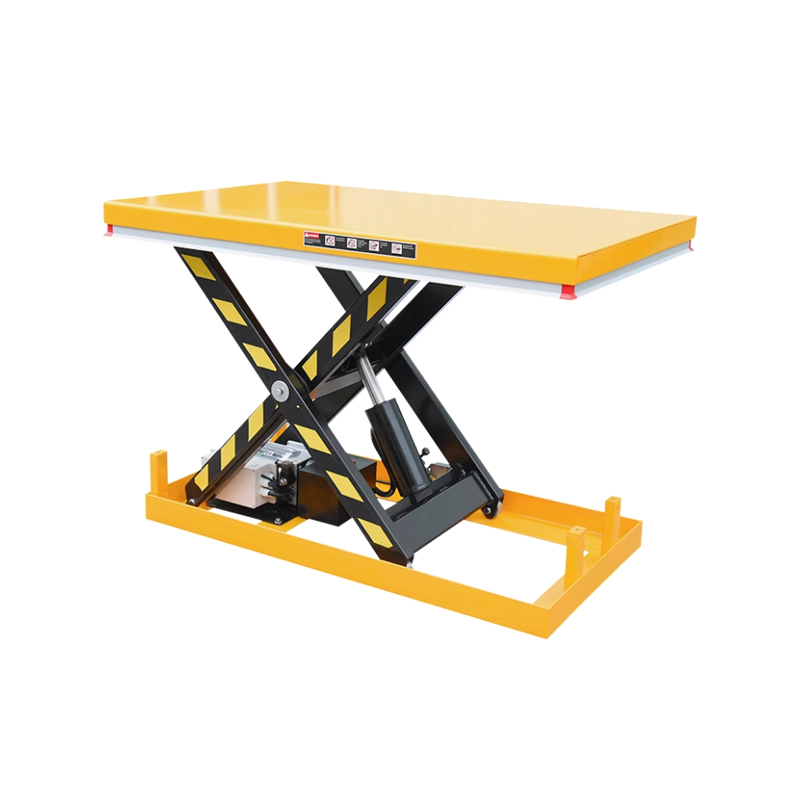 Custom Fixed lift platform Manufacturer, CompanyHangzhou Viilift Industrial Equipment Co., Ltd. is China Custom Fixed lift platform Manufacturer and Company,It can be customized accordi...View Product →
How to Choose the Right Lifting Platform Vehicle: Key Parameters
Selecting a machine based on brand or price alone is risky. You need to match six parameters to your specific job requirements. Skipping this analysis leads to either an undersized machine that breaks down or an oversized machine that wastes budget.
- Load Capacity (weight): Calculate the heaviest single load you will ever lift. Add a 20% safety margin. If you frequently move 600 lb items, choose a 1,000 lb rated machine. Overloading a hydraulic system is the #1 cause of early failure.
- Lifting Height: Measure the height of your workbench, machine bed, or rack level. The platform must reach that height with room to spare. A standard table height is around 30-35 inches; a mezzanine needs much more.
- Platform Size: The platform must comfortably accommodate your largest load footprint. If you move 48x48 inch pallets, a 32x20 inch platform will cause instability. Measure your load dimensions, not just weight.
- Usage Frequency (duty cycle): How many lifts per hour? Manual units are fine for 5-10 lifts/hour. If you approach 20+ lifts/hour, switch to electric to avoid operator fatigue and productivity losses.
- Operating Environment: Indoor dry floors suit standard steel machines. Outdoor areas or wet environments require sealed components and corrosion-resistant paint. Food processing or chemical facilities might require stainless steel construction to meet hygiene standards.
- Special Requirements: Consider if you need non-standard dimensions or materials. For instance, some facilities have exceptionally narrow aisles or need extra-long platforms for lengthy items. Viilift has a portfolio of custom solutions, including extended and ultra-short pallet trucks, demonstrating the capability to produce special-shaped equipment beyond standard catalogs.
The decision matrix simplifies as follows: low frequency + lightweight = manual; high frequency + heavy = electric; stationary vertical transport = fixed platform. Use these parameters to shortlist options before contacting suppliers, so you can have informed discussions about specifications and pricing.
Safety & Maintenance Tips for Lifting Platform Vehicles
Vertical lifting equipment involves significant potential energy. A 1,000 lb platform raised four feet high can cause severe injury if it drops. Adopting strict safety and maintenance routines is non-negotiable, regardless of whether you use a manual or electric unit.
Daily Pre-Operation Checks
- Inspect hydraulic system: Look for oil leaks around cylinders, hoses, and pumps. Low fluid levels cause jerky movement and premature wear.
- Check platform integrity: Look for cracks, bends, or loose welds on the platform surface and scissor arms.
- Test controls: On electric units, verify that lift/lower buttons respond immediately and the emergency stop works correctly.
- Clear the area: Ensure no objects are under the load path and the floor around the unit is dry and unobstructed.
Safe Operating Rules
- Never exceed the rated load. The nameplate rating is absolute; it includes a safety factor, but repeated overloads will bend the frame and weaken hydraulics.
- No riders. These machines are for goods, not people. Never stand on the platform or allow anyone to ride while lifting.
- No body parts under the platform. Keep feet and hands clear of the scissor mechanism and the area directly beneath the platform at all times.
- Center the load. Unbalanced loads can tip the unit, especially on mobile manual trucks. Always distribute weight evenly.
Maintenance Schedule
- Weekly: Clean the platform surface and rails. Remove debris that could jam the scissor mechanism.
- Monthly: Check hydraulic oil level and top up with the manufacturer's recommended fluid. Inspect wheels for wear.
- Quarterly: Lubricate pivot points and pins. Test the limit switches on electric models to ensure automatic cut-off works.
- Annually: Conduct a full inspection, ideally by a qualified technician. This includes checking cylinder seals, hoses, and structural joints.
Proper training is the most cost-effective safety investment. Every operator, even part-time users, should read and understand the operating manual. For more detail on safe handling procedures, refer to our guide on the key safety tips for lifting equipment.
What to Look for in a Lifting Platform Vehicle Manufacturer
When evaluating suppliers, the product specifications are only half the equation. The manufacturer's capabilities determine lead times, product quality, customization options, and long-term support. A weak supplier can turn a good product into a constant source of downtime. Assess these five areas before making a commitment.
1. Product Line Breadth
A supplier with a wide range—manual, electric, fixed, plus varying capacities—demonstrates deep engineering knowledge. It also means they can supply spare parts and related equipment as your needs evolve. A company that only makes one type may not understand the full application landscape.
2. Manufacturing Capability
Verify whether they operate their own factory or merely resell imported goods. Physical manufacturing assets indicate quality control capability and customization flexibility. For context, Viilift operates a 5,000 square meter production facility with a team of 50 production staff and 5 technical engineers. This scale allows for hands-on quality management and custom fabrication, rather than just assembling off-the-shelf components.
3. Industry Experience and Innovation
Longevity in the market suggests reliability and institutional knowledge. Look for evidence of product development, such as patents or proprietary designs. Viilift, for example, indicates 20 years of industry experience and holds 22 national patents, reflecting ongoing engineering investment rather than static production of basic designs. They also note a provincial technology R&D center, which signals formalized innovation capacity.
4. Delivery and Export Track Record
Inquire about standard lead times and their experience handling international orders. A manufacturer with export experience understands packaging, shipping documentation, and compliance issues that might not apply to domestic suppliers. Viilift states an average delivery time of about 7 days and reports export sales of $5 million, indicating established logistics workflows for overseas clients.
5. Multilingual Support and Documentation
If you are importing, clear communication is vital. A manufacturer offering support in multiple languages (Viilift provides service in English, German, Spanish, French, and Belarusian) simplifies the process from initial inquiry to after-sales parts ordering.
A reliable way to verify product quality and suitability is to request documentation. Any credible manufacturer provides detailed product brochures. You can check the specifications and features directly to confirm the machine meets your parameters. For reference, you can download the lifting platform vehicle brochure to see what level of detail you should expect from a professional supplier.
Conclusion: Choosing the Right Lift for Your Operation
Selecting a lifting platform vehicle comes down to a logical sequence: define your workflow, match the power type, confirm the load and height parameters, vet the manufacturer's credentials, and then obtain a detailed quotation. Skip any of these steps, and you risk purchasing a machine that underperforms or requires early replacement.
Revisit the key decision points. If your lifts are occasional and budgets are tight, a manual unit is sufficient. If your operators perform lifts all day, invest in an electric model for efficiency and ergonomics. If you are solving a fixed vertical transport problem between two levels, a fixed platform is the engineered solution.
Finally, treat the supplier selection with the same rigor as the product selection. Look for proven manufacturing experience, transparent production capabilities, and responsive communication. With these criteria in mind, you can confidently choose equipment that improves safety and productivity for years to come.