
 English
 Deutsch
 Español
 Français
 Беларуская

Content
- 1 Why an Electric Pallet Truck Justifies Its Place in a Warehouse
- 2 What an Electric Pallet Truck Does and How It Differs from Manual and Semi-Electric Models
- 3 The Specifications That Influence Daily Performance
- 4 Battery and Drive Technology: The Real Cost Over Five Years
- 5 Semi-Electric and Weighing Variants: Choosing the Right Configuration
- 6 Safety and Ergonomics: What Operators Notice After the First Shift
- 7 Buying Direct from a Manufacturer: What Viilift Delivers
Why an Electric Pallet Truck Justifies Its Place in a Warehouse
A distribution supervisor watching operators push loaded pallets across a 60-meter staging floor sees the same inefficiency every shift: roughly half the cycle time is spent walking and pumping a manual truck. The conclusion from the data is clear. Once a facility moves about 40 loaded pallets per shift, an electric pallet truck starts paying for itself in less than a year through reduced labor alone. It does not stack loads, but it performs the task that warehouse work actually depends on: moving pallets horizontally, quickly, and safely.
This buying guide covers the specifications that determine whether an electric pallet truck earns its keep, the operational differences between manual, semi-electric, and fully electric machines, the battery and drive technologies that drive long-term ownership costs, and the safety features worth paying for.
What an Electric Pallet Truck Does and How It Differs from Manual and Semi-Electric Models
An electric pallet truck, also called an electric pallet jack or walkie pallet truck, is a battery-powered machine that lifts a loaded pallet a few centimeters and transports it across the floor at walking speed. The operator walks beside the machine and controls direction and speed through a tiller arm. Because it is designed for horizontal transport rather than stacking, it fits loading docks, production lines, and dispatch areas where a counterbalance forklift would be too large and difficult to maneuver.
Three power configurations compared
The choice between manual, semi-electric, and full electric comes down to where the operator's effort goes. The table below summarizes the differences that affect daily operating costs.
| Feature | Manual pallet truck | Semi-electric pallet truck | Electric pallet truck |
|---|---|---|---|
| Typical rated load | 2.0–2.5 t | 1.5–2.0 t | 1.5–3.0 t |
| Travel drive | Operator pushes the machine | Electric drive, manual lift | Electric drive and electric lift |
| Operator effort | High | Medium | Low |
| Best fit | Spot moves, low volume | Mixed workloads | Continuous high-volume transport |
The pattern is consistent: the more pallets a shift moves, the more attractive full electric power becomes. Manual trucks remain practical for spot moves and low volumes, semi-electric models cover intermittent workloads, and full electric trucks earn their higher price when they run for several hours a day. For unpaved yards and trailer ramps, rough-terrain electric pallet trucks with larger wheels extend the same convenience to outdoor conditions.
The Specifications That Influence Daily Performance
Buyers often ask about maximum speed first, but the specifications that truly influence daily performance are load capacity, fork geometry, battery size, and control precision.
Load capacity and fork geometry
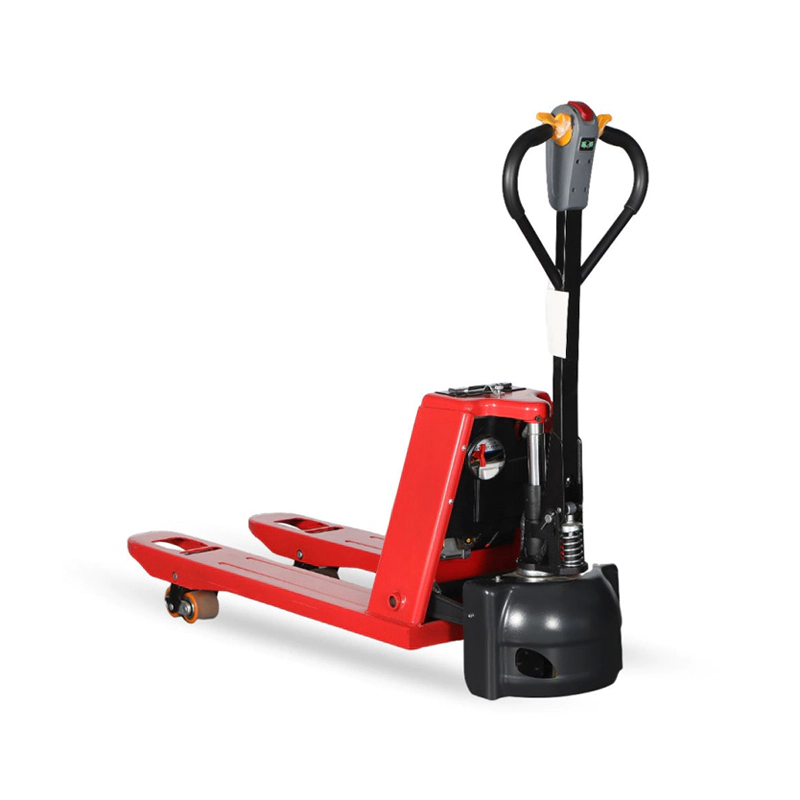
Capacity is rated with the load centered over the forks. A 1.5-tonne electric pallet truck such as the CBD15 electric pallet truck suits e-commerce cartons, light manufacturing, and food distribution. Operations handling steel parts, kegs, or dense chemicals should move to the 2.0–3.0 t class. Fork length must match the pallet: 1,150–1,200 mm forks handle standard Euro pallets, while extended and ultra-short fork variants exist in the wider Viilift range for odd pallet sizes and narrow trailer bodies.
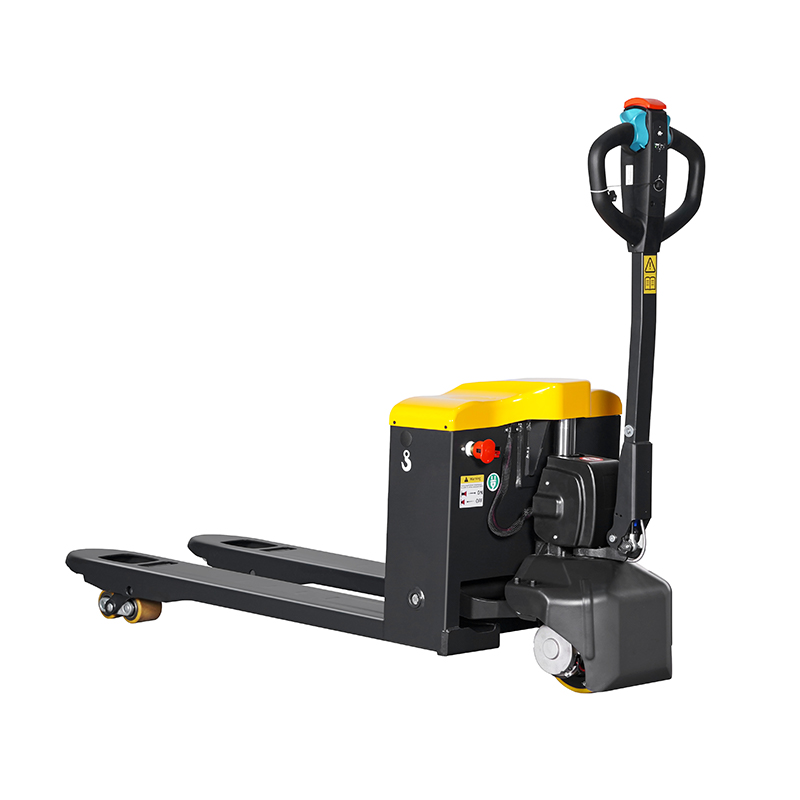 Custom CBD-15 electric pallet truck Manufacturer, CompanyHangzhou Viilift Industrial Equipment Co., Ltd. is China Custom CBD-15 electric pallet truck Manufacturer and Company,*Equipped with high...View Product →
Battery, motor, and control system
The drive system converts battery energy into movement, and the control system decides how precisely the operator can creep into tight rack openings. AC drive motors deliver smoother acceleration and better low-speed handling than older DC systems. Battery capacity, measured in ampere-hours, sets the run time between charges. Charging strategy matters just as much: a lithium battery can accept a quick charge during breaks, while a lead-acid battery usually needs a full charge and a cooling period before the next shift.
| Specification | Typical range | Why it matters |
|---|---|---|
| Rated load | 1,500–3,000 kg | Sets the maximum pallet weight and ramp safety margin |
| Fork length | 1,000–2,400 mm | Must match pallet size and rack or trailer geometry |
| Travel speed | 3.5–6.0 km/h when loaded | Shortens cycle time on runs over 30 meters |
| Battery voltage | 24 V, lithium or lead-acid | Determines fast-charge options and total energy cost |
| Charge time | 2–6 hours | Governs shift planning and multi-shift feasibility |
| Turning radius | 1,300–1,600 mm | Dictates the minimum aisle width and trailer turnaround space |
Battery and Drive Technology: The Real Cost Over Five Years
The purchase price of an electric pallet truck is only the first part of the total cost equation. Over five years, the battery and drive system represent the largest recurring cost after labor, because they determine electricity consumption, maintenance intervals, and replacement timing.
Lithium-ion vs. lead-acid batteries
Lead-acid batteries cost less at the start, tolerate rough charging habits, and remain the default for single-shift operations. Their drawbacks are the six-to-eight-hour charge time, the cooling period before recharging, weekly water maintenance, and a typical service life of about 1,500 charge cycles. Lithium-ion batteries cost more up front but charge fully in two to three hours, support opportunity charging during breaks, weigh less, and typically last more than 3,000 cycles. For multi-shift warehouses, the lithium premium usually pays back within the life of the battery.
Why AC drive systems reduce maintenance
AC brushless motors eliminate the carbon brushes that wear out in older DC motors, and regenerative braking returns energy to the battery while reducing brake wear. The result is longer service intervals and more predictable running costs. When comparing quotes, ask whether the motor, controller, and battery are matched by one manufacturer rather than assembled from mismatched components.
Semi-Electric and Weighing Variants: Choosing the Right Configuration
Not every operation needs a full electric pallet truck. Two variants solve specific problems: semi-electric models for facilities that cannot justify full electric power, and weighing pallet trucks for operations that currently weigh every load twice.
Semi-electric pallet trucks for intermittent workloads
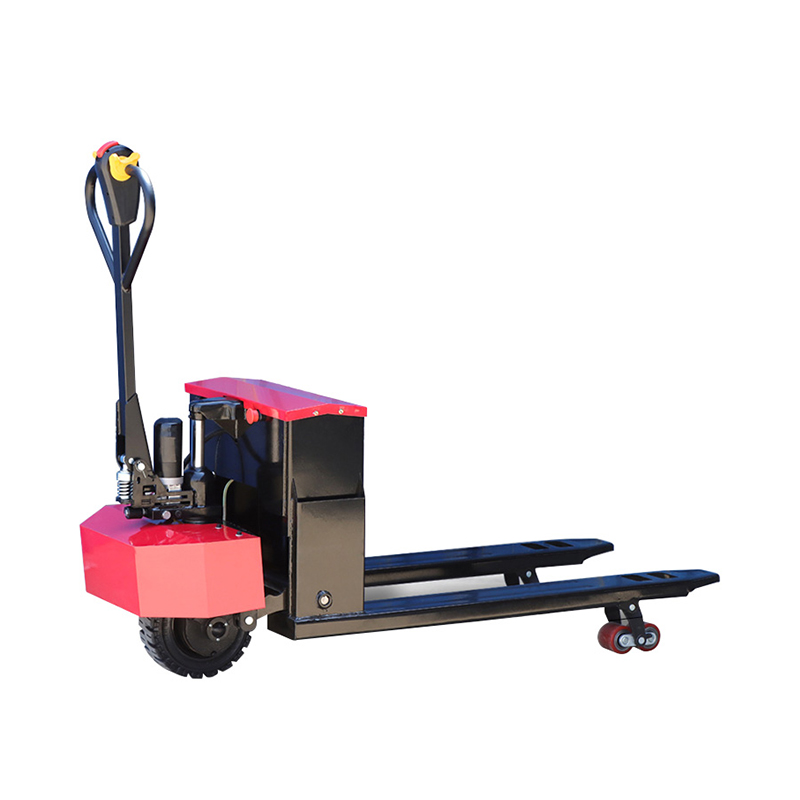
A semi-electric pallet truck keeps the manual lift pump but adds electric travel drive, so the operator no longer pushes the load. This configuration suits spare-parts stores, maintenance departments, and small warehouses where a full electric truck would sit idle for much of the day. The semi-electric pallet truck CMG20 is a sensible mid-point: it costs less than a full electric model, uses a smaller battery, and removes the most tiring part of manual work, which is the pushing.
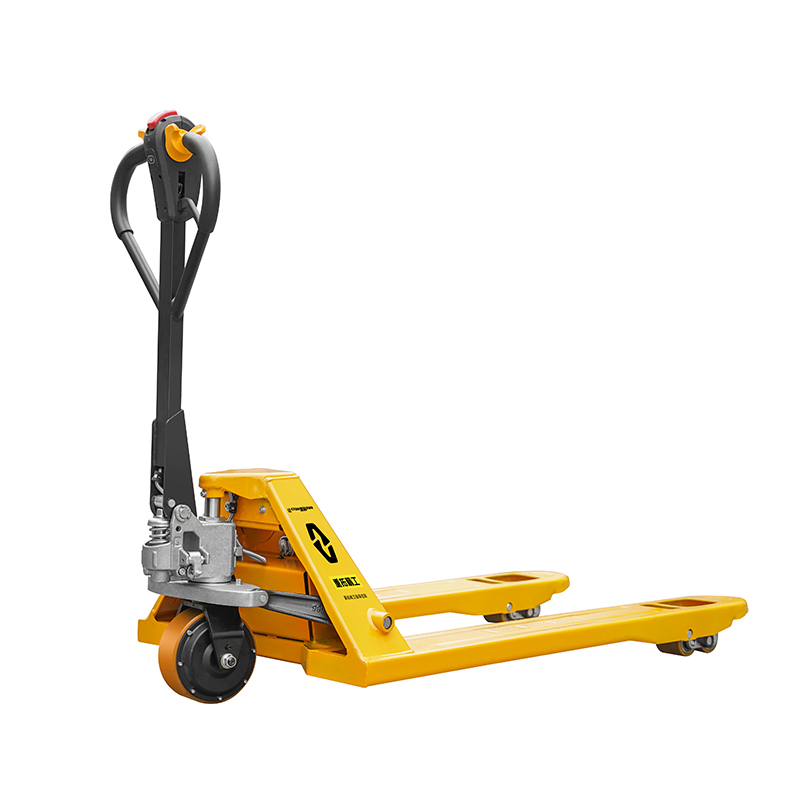 Custom Semi-electric pallet truck CMG-20 Manufacturer, CompanyHangzhou Viilift Industrial Equipment Co., Ltd. is China Custom Semi-electric pallet truck CMG-20 Manufacturer and Company,*Upgraded the ...View Product →
Weighing pallet trucks that stop double handling
Operations that verify weights at dispatch, receiving, or production can save a separate trip to a floor scale by choosing a pallet truck with an integrated scale. The operator lifts the pallet, reads the weight on the display, and moves on. The electric weighing pallet truck CBDC fits exactly this workflow. The article on the benefits of weighing pallet trucks explains how this shortens verification time in real warehouse conditions.
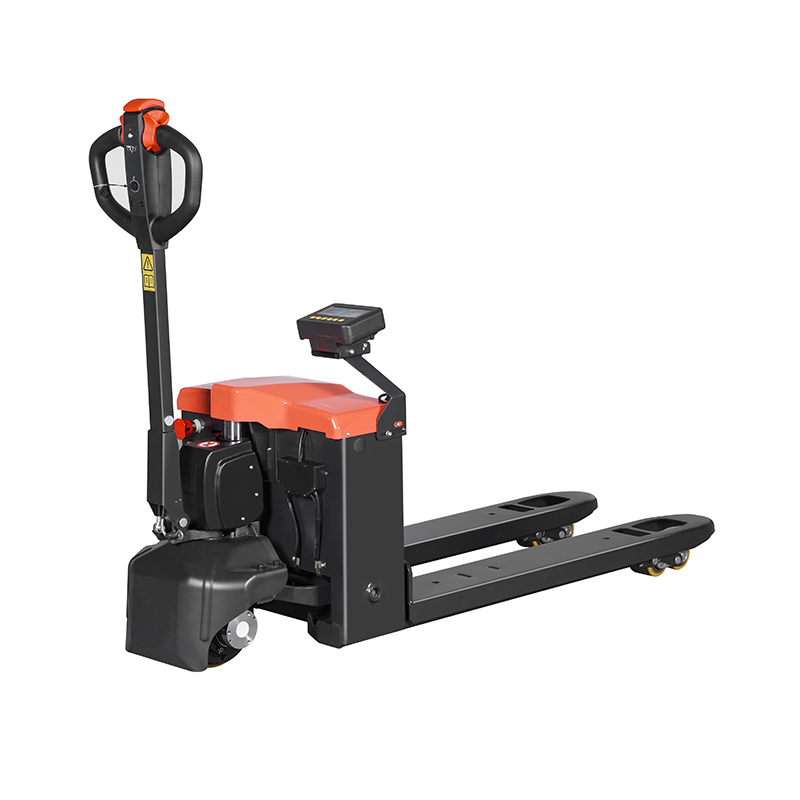 Custom Electric weighing truck CBD-C Manufacturer, CompanyHangzhou Viilift Industrial Equipment Co., Ltd. is China Custom Electric weighing truck CBD-C Manufacturer and Company,On the basis of th...View Product →
Safety and Ergonomics: What Operators Notice After the First Shift
Safety features are not accessories. They determine whether an electric pallet truck can be used in busy aisles and on loading docks without creating new risks. A complete machine should include an emergency stop button within thumb reach, a reversing tiller that automatically stops the truck if the operator is pushed backward, and a creep-speed setting for entering trailers and narrow rack openings.
Ergonomics affects throughput in a way that accountants rarely notice but operators feel immediately. A tiller with a comfortable grip, a responsive throttle, and smooth braking reduces fatigue, and fatigue is what causes the slowdowns visible in end-of-shift productivity reports.
Buying Direct from a Manufacturer: What Viilift Delivers
Viilift is a Hangzhou-based manufacturer with 20 years of experience in material handling equipment, 22 national patents, and a 5,000 m² production facility supported by 50 production staff and a provincial technical research center. The company publishes an average delivery time of 7 days, a result of precise scheduling rather than long finished-goods lead times. Its export business, stated at approximately 5 million USD, comes with multilingual support in English, German, Spanish, French, and Belarusian, which matters when you need manuals and documentation in your own language.
Before committing to a supplier, request the full specification sheet, watch the machine in motion, and confirm the configuration matches your pallet sizes and shift pattern. The electric pallet truck brochure contains the technical data, and the electric pallet truck demonstration videos show how the machines handle in real conditions.
To keep the selection process practical, work through this checklist:
- Match the rated load and fork length to your heaviest pallet and tightest aisle.
- Choose the battery chemistry according to shift length and available charging windows.
- Confirm the key safety features: emergency stop, reversing tiller, and creep speed.
- Request the technical brochure and confirm the configuration in writing before paying.
An electric pallet truck is an investment in throughput, not just a piece of warehouse equipment. Choose the right capacity, the right battery, and the right variant for your workload, and the machine will pay for itself in reduced labor, better load verification, and fewer accidents. Start with the specifications that matter, then verify them against your own pallets, aisles, and shift hours.