
 English
 Deutsch
 Español
 Français
 Беларуская

A high lift truck brings a loaded pallet to bench height in a few strokes of a hydraulic pump or the press of a button. For an operator who would otherwise crouch, grip, and strain over a 600 kg load four or five times an hour, that difference changes the whole shift. The machine sits between a standard pallet truck and a counterbalance forklift: more vertical reach than a pallet jack, lower cost and simpler operation than a forklift.
What Is a High Lift Truck and How Does It Differ from Other Equipment?
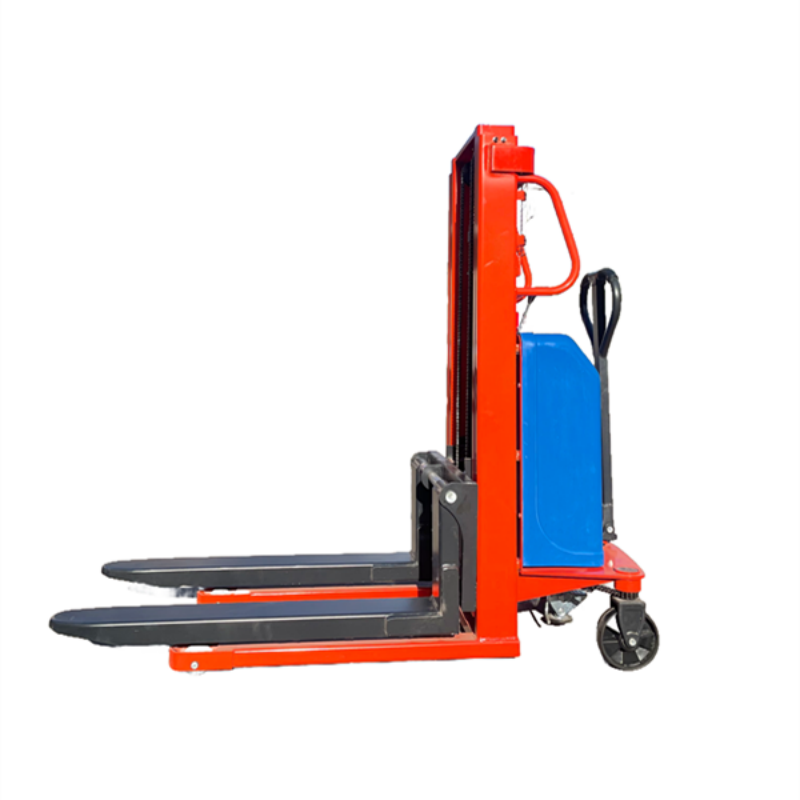
A high lift truck is a walk-behind, fork-based machine that can elevate a loaded pallet well above the ground. Where a standard pallet truck raises only about 100-200 mm, enough to clear the floor for transport, a high lift truck typically reaches 800-1,500 mm and sometimes higher. That places the load at workbench, machining table, packing, weighing, or feeding height, so the operator handles the pallet upright instead of working down low.
The difference from a stacker is structural. Stackers use a wide base or straddle legs and are designed to place loads onto racks at several meters of height. High lift trucks use a compact chassis and are optimized for low-level lifting, workstation feeding, and short vertical transfers. If your job involves getting pallets onto benches or low platforms, a high lift truck is more maneuverable and less expensive than a stacker. If you need to fill rack positions at two to three meters, a stacker is the better tool.
| Feature | Pallet truck | High lift truck | Manual stacker |
|---|---|---|---|
| Lift height | 100-200 mm | 800-1,500 mm | 1,500-3,000 mm |
| Typical capacity | 1,500-3,000 kg | 500-1,000 kg | 500-1,000 kg |
| Main job | Horizontal transport | Workstation feeding and low lifting | Racking and stacking |
| Chassis | Fork entry only | Fork entry | Straddle legs or fork |
| Typical cost level | Low | Moderate | Moderate |
Why a High Lift Truck Earns Its Place in Your Workflow
The main argument is simple: it reduces strain and speeds up any task where a load must leave the floor. Forklifts are powerful but expensive to assign to short repetitive lifts. A high lift truck can stay parked near a workstation and be used continuously without tying up a forklift or its driver.
Reduces Repetitive Strain Injuries
Each manual lift of a heavy pallet involves the lower back, knees, and shoulders. Over a shift, even a moderate load creates fatigue; over months, that pattern links directly to musculoskeletal complaints. With a high lift truck, the pump handle or the electric motor performs the lifting. Operators keep their feet and back stable, which is the strongest safety argument for this equipment.
Saves Time on Every Cycle
Time is saved in two places: the lift itself and the easier positioning of the load. A worker who does not need to crouch, grip, and pull can align a pallet directly at bench height. In packing or kitting operations, the seconds saved per pallet multiply into measurable throughput gains across a week.
Costs Less Than a Forklift
The purchase price, maintenance burden, and training requirement of a high lift truck are all lower than those of a counterbalance forklift. For a warehouse that only needs loads brought up to bench level, investing in forklift capacity that sits unused is poor allocation. A high lift truck covers that workflow at a fraction of the cost.
Manual, Semi-Electric, or Electric: Choosing the Right Power Source
High lift trucks are offered in three drive configurations. The right choice depends on how often the truck lifts, how far it travels, and who will use it.
Manual High Lift Trucks
In a manual high lift truck, the operator pushes the machine and uses a foot-operated or hand-operated hydraulic pump to raise the forks. Models such as the manual high lift truck GBC10 are robust, easy to maintain, and require no battery management. They are a sensible starting point for low-frequency tasks: a few lifts per shift, short distances, and a tight budget. Once the handle is pumped, the hydraulic system holds the load reliably at height.
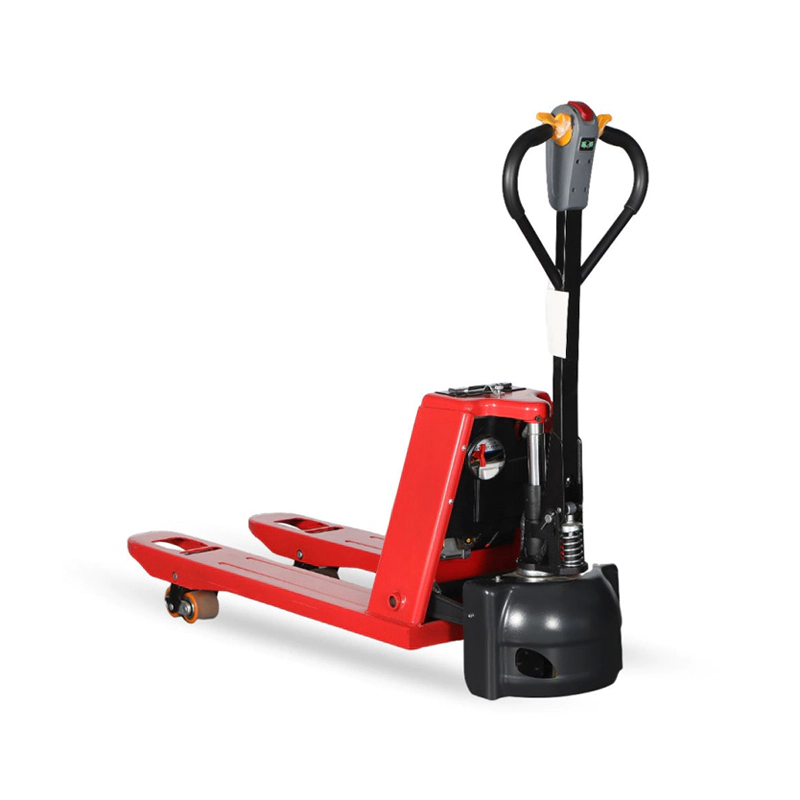
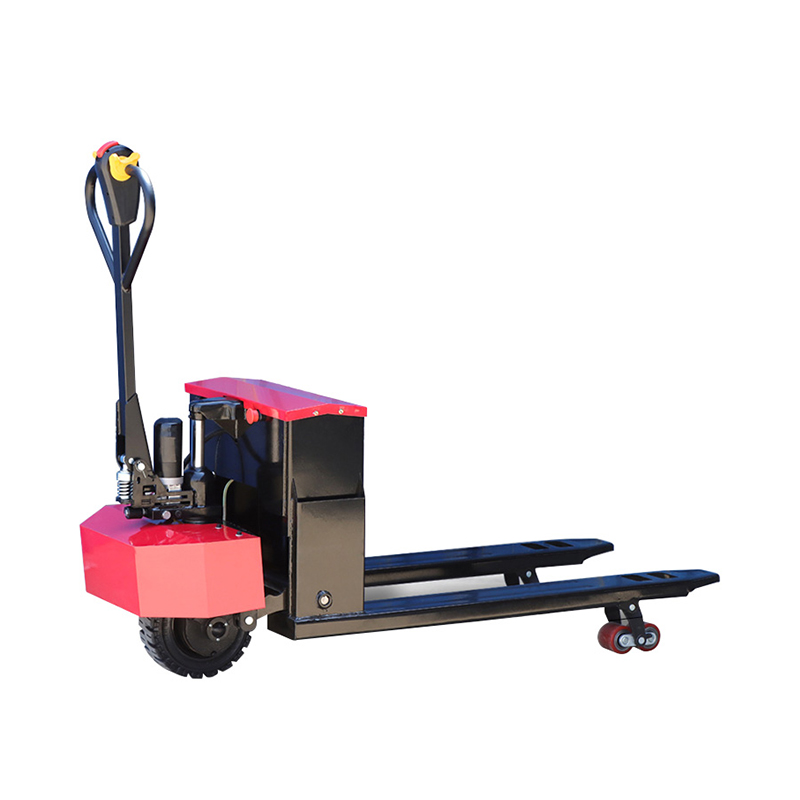
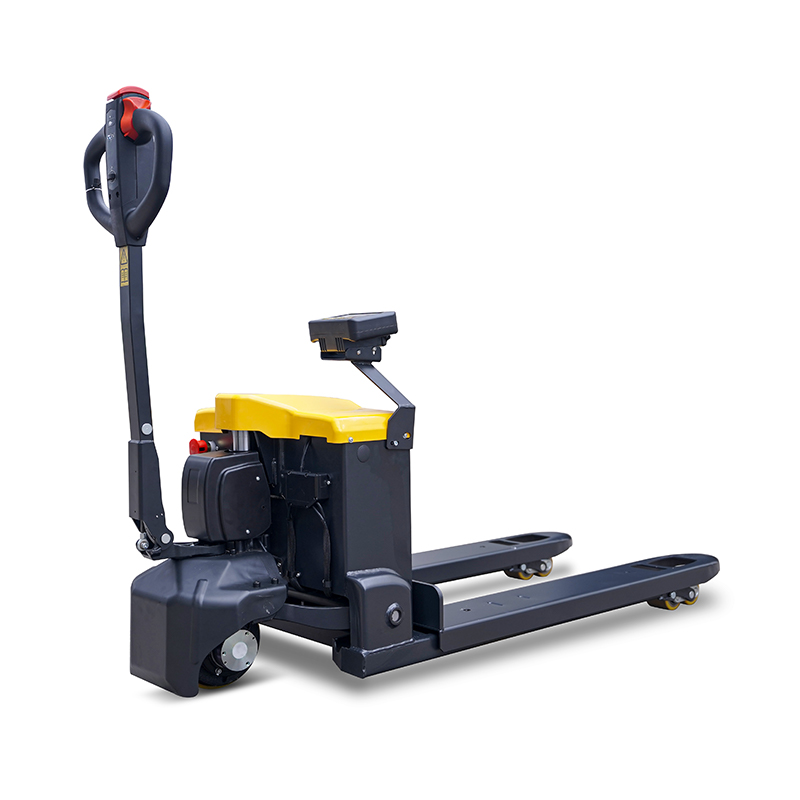
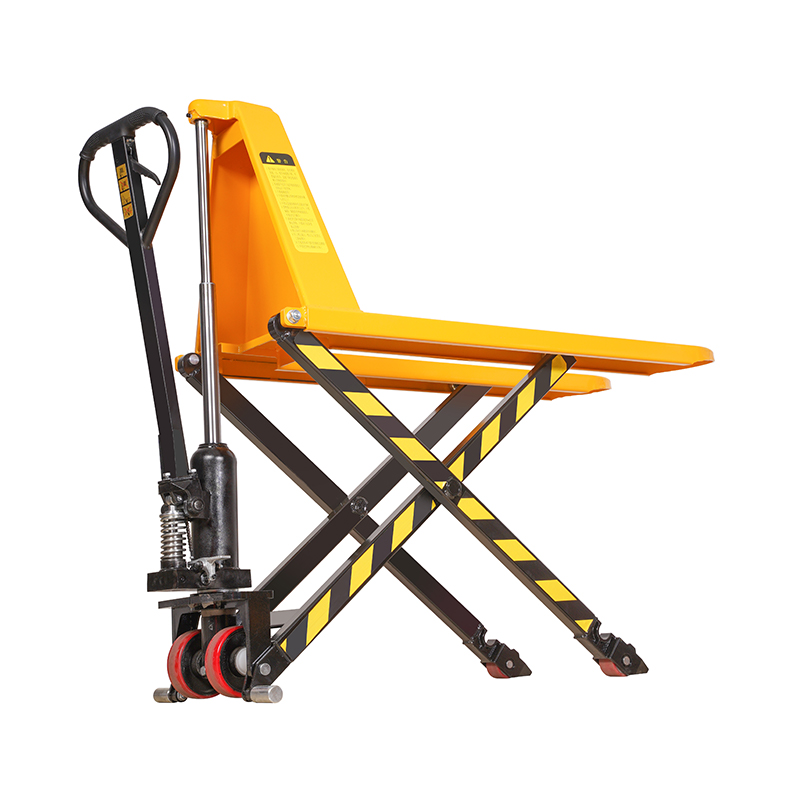 Custom Manual high lift truck GBC10 Manufacturer, CompanyHangzhou Viilift Industrial Equipment Co., Ltd. is China Custom Manual high lift truck GBC10 Manufacturer and Company,*Thickened high car...View Product →
Semi-Electric High Lift Trucks
A semi-electric unit uses an electric motor for lifting while the operator continues to push the truck. This removes the most tiring part of the cycle, the lifting itself, while keeping the design simple and the budget contained. The semi-electric high lift truck fits operations where lifting happens frequently but travel distances stay short, for instance feeding a single production line or a quality-control station. It is the most common upgrade path from a manual unit because operators feel the difference immediately.
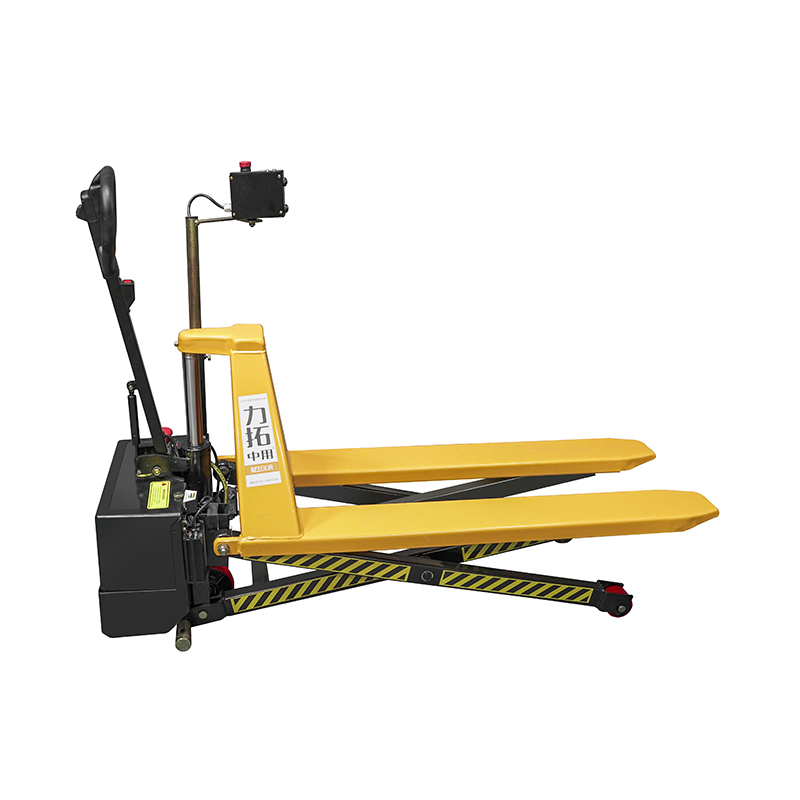 Custom Semi-electric high lift truck EGBC10 Manufacturer, CompanyHangzhou Viilift Industrial Equipment Co., Ltd. is China Custom Semi-electric high lift truck EGBC10 Manufacturer and Company,*Handling a...View Product →
Electric High Lift Trucks
An electric high lift truck handles both lifting and travel under power. It is intended for continuous, shift-long duty: loading and unloading workstations, moving pallets between multiple cells, or rotating through a small warehouse. The electric drive raises throughput and lowers fatigue, at the cost of batteries, charging infrastructure, and a higher budget. For operations with real volume, the payback comes from labor saved and smoother material flow.
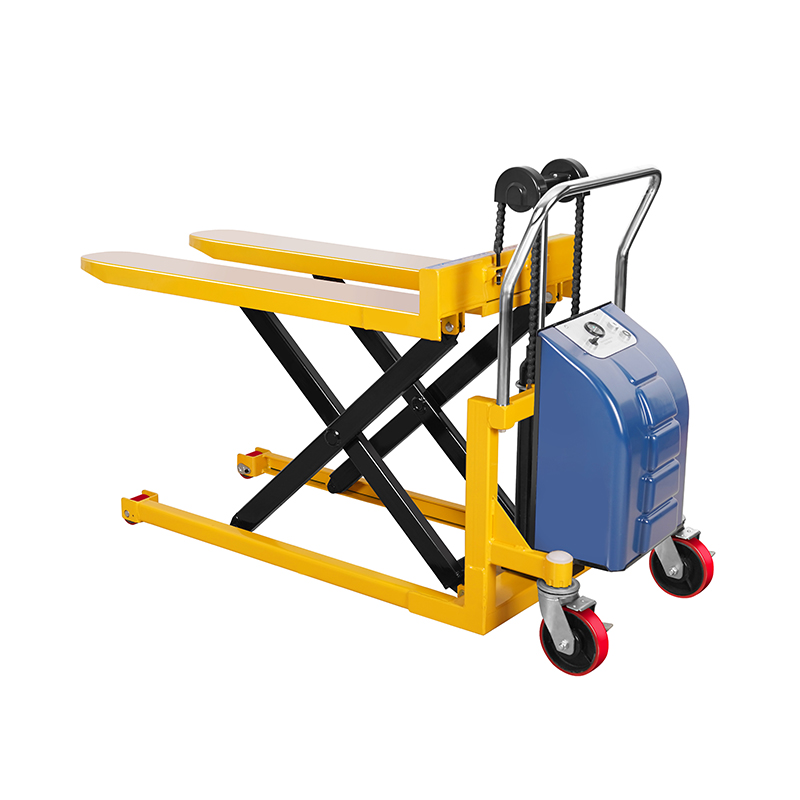 Custom Electric high lift truck EGSD10 Manufacturer, CompanyHangzhou Viilift Industrial Equipment Co., Ltd. is China Custom Electric high lift truck EGSD10 Manufacturer and Company,It adopts electr...View Product →
Here is a quick comparison based on the typical models in the high lift truck class:
| Feature | Manual | Semi-electric | Electric |
|---|---|---|---|
| Lift operation | Hydraulic pump | Electric motor | Electric motor |
| Travel | Pushed by operator | Pushed by operator | Motorized |
| Typical capacity | 1,000 kg | 1,000 kg | 1,000 kg |
| Best use | Occasional lifting | Frequent lifting, short runs | Continuous use, longer runs |
| Purchase and running cost | Lowest | Medium | Higher |
Specifications to Verify Before You Buy
Once you have narrowed down the power type, a short checklist will protect you from costly mismatches.
- Lift height: measure the actual working height, whether it is a bench surface, conveyor line, or the lowest rack lip. Choose a machine that covers it with a safety margin rather than an exact match.
- Load capacity: include the pallet itself and any fixture on it. An 800 kg load plus a heavy pallet can push close to the 1,000 kg rating of a typical high lift truck.
- Fork dimensions: fork length and width should suit your pallets and their entry openings. Oversized forks slow the cycle; undersized forks create stability risks.
- Floor conditions: smooth concrete suits standard wheels, while rougher floors need larger or polyurethane wheels. Stainless-steel versions are available for washdown areas and food or pharmaceutical environments.
- Maintenance access: check that the hydraulic unit, battery on powered models, and wheels are easy to reach. Simpler access means a lower long-term service cost.
For a complete overview of available models, load charts, and optional configurations, take a look at the high lift truck brochure and review the full high lift truck lineup to match a machine to your actual workflow.
Operating and Safety Considerations
High lift trucks are simpler than forklifts, but the basic rules of safe material handling still apply. Loads should be centered on the forks, the load must be stable before lifting, and the truck should only travel on surfaces that support both the machine and its rated load. Operators should follow a consistent routine: lower the forks fully when parked, keep hands clear of the lifting mechanism, and never place any part of the body under a raised load.
The operating culture matters as much as the hardware. Set up a simple daily check of wheels, hydraulics, and fork movement; replace worn parts promptly; and make sure every employee understands the rated capacity of the machines they use. These key safety tips for lifting equipment cover the common errors that cause most incidents in warehouses.
Bottom Line
A high lift truck is the right tool when your process repeatedly needs a pallet at working height, a forklift is overkill, and a standard pallet truck leaves the heavy work to your operators. Decide on the power type based on lifting frequency and travel distance, verify the required height and capacity on paper, then choose the model that fits your floor and environment.
A manual unit keeps the initial outlay low for occasional lifting. A semi-electric version delivers the clearest improvement in operator comfort when lifts are frequent but travel is short. An electric model pays off when material flows continuously across a warehouse floor.