
 English
 Deutsch
 Español
 Français
 Беларуская

Content
- 1 A Manual Pallet Truck Is a Fit Decision Before It Is a Price Decision
- 2 What Is a Manual Pallet Truck and How Does It Work?
- 3 Core Specifications That Determine Fit
- 4 Manual, Semi-Electric, or Electric: Which Makes Sense?
- 5 Matching the Model to Your Operating Environment
- 6 Safety, Maintenance, and Total Cost of Ownership
- 7 Why a Full-Variant Manufacturer Makes the Sourcing Process Easier
A Manual Pallet Truck Is a Fit Decision Before It Is a Price Decision
Inside a busy distribution center, a manual pallet truck can cover several kilometers in one shift and move thousands of kilograms without a single battery charge. Yet most selection mistakes do not come from capacity numbers; they come from choosing a truck that does not fit the pallet, the rack, or the floor. Fork geometry, wheel type, and lowered height cause more selection errors than price does. So before comparing quotes, map the exact conditions where the truck will work. This guide explains the specifications that matter, the main variants available, and the practical steps that lead to the right purchase.
What Is a Manual Pallet Truck and How Does It Work?
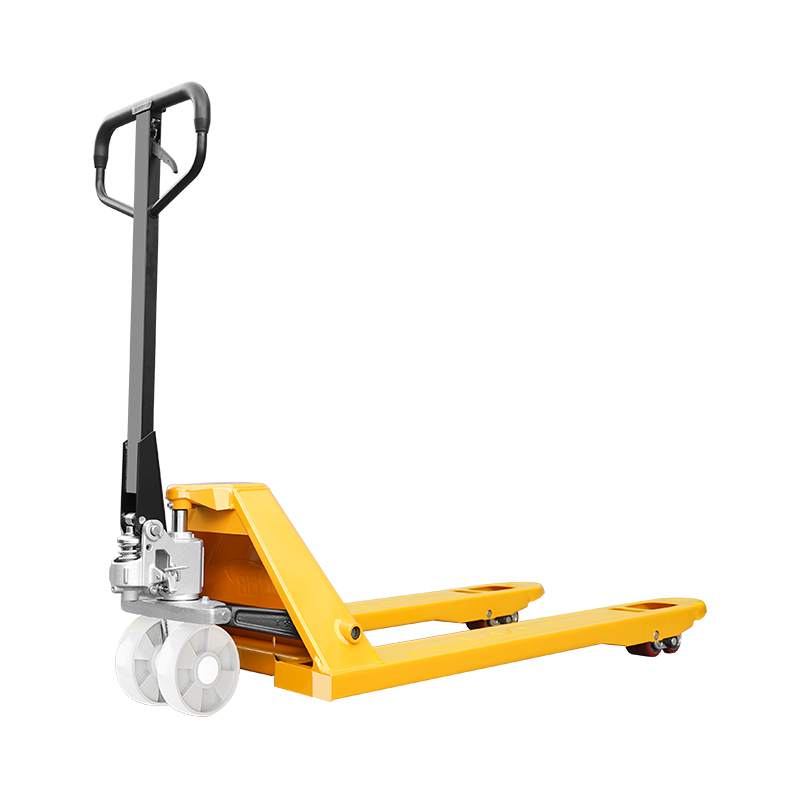
A manual pallet truck, also called a hand pallet jack or hand pallet truck, is a pedestrian-operated hydraulic device that raises a loaded pallet only a few centimeters and moves it across a flat surface. When the operator pumps the handle, the hydraulic pump extends a ram that lifts the fork assembly. When the operation is finished, pulling the release lever drops the load gently to the floor.
The practical differences between one model and another usually come from these components:
- Fork blades: the two arms that slide under the pallet; their width, length, and thickness define which pallets the truck can enter.
- Hydraulic pump unit: the lifting mechanism; a worn pump increases effort and slows every cycle.
- Load wheels: mounted inside the fork ends; they carry most of the weight and react directly to floor roughness.
- Steer wheels: located at the rear near the handle; they control steering and affect the truck's turning radius.
- Handle and release lever: the operator controls pump strokes, braking, and lowering speed here.
Because the equipment has no motor, battery, or charger, it is the fastest material handling asset to put into service. For an overview of available configurations, see our full manual pallet truck range.
Core Specifications That Determine Fit
Manufacturers may list the same load capacity, but the truck still may not suit the building. Four specifications decide most practical compatibility: capacity, fork dimensions, lowered fork height, and wheels.
Load Capacity and Duty Cycle
Standard manual pallet trucks typically rate between 2.0 and 2.5 tons, which covers most racking and loading areas. Heavy-duty models reach 5.0 tons for dense materials such as steel coils, concrete blocks, and large machine parts. Capacity alone is not enough; duty cycle matters as well. A truck used on long routes, frequent ramps, or rough outdoor surfaces will need more robust wheels, stronger fork welds, and more frequent seal replacement than a truck used only on smooth concrete.
Fork Width, Length, and Opening Height
Fork width should match the pallet opening. A European pallet of 800 x 1,200 millimeters typically works with 520 to 550 millimeter forks, while wider pallets may need 685 millimeters. Fork length usually ranges from 1,150 to 1,220 millimeters, but extended forks up to 1,500 millimeters or longer move unusual loads safely. The lowered fork height is equally important: standard trucks sit 75 to 85 millimeters above the ground, while low-profile trucks can drop to 45 to 60 millimeters for skids, closed pallets, and containers with low entry clearance. When a fork cannot enter, capacity is irrelevant.
Wheels and Floor Conditions
Nylon wheels roll easily on smooth concrete and resist wear, but they can be noisy. Polyurethane wheels protect polished epoxy floors and reduce noise. Steel wheels cope with metal chips and rough industrial floors but can damage soft coatings. Larger wheels improve movement over thresholds and expansion joints, while smaller wheels lower the truck profile and improve entry under pallets.
| Specification | Standard | Heavy-duty | Low-profile | Stainless steel |
|---|---|---|---|---|
| Typical load capacity | 2.0 to 2.5 t | 4.0 to 5.0 t | 1.5 to 2.0 t | 2.0 to 2.5 t |
| Fork width | 520 to 550 mm | 550 to 685 mm | 520 to 550 mm | 520 to 550 mm |
| Fork length | 1,150 to 1,220 mm | 1,220 to 1,500 mm | 800 to 1,000 mm | 1,150 to 1,220 mm |
| Lowered fork height | 75 to 85 mm | 80 to 90 mm | 45 to 60 mm | 75 to 85 mm |
| Lift height | 180 to 200 mm | 200 to 205 mm | 150 to 180 mm | 180 to 200 mm |
| Typical environment | General warehouse | Steel, heavy industry | Low-clearance pallets | Food, pharma, washdown |
A table is not a replacement for physical verification. Ask for a drawing of the fork and check the floor condition before approving a model.
Manual, Semi-Electric, or Electric: Which Makes Sense?
Manual pallet trucks are ideal when travel distance is short and lifting frequency is low. That includes picking areas, production lines, and daily replenishment. However, if an operator moves loads more than around 50 to 100 meters per cycle or lifts the fork more than 20 times an hour, the physical effort begins to affect productivity. In those situations, a powered truck reduces fatigue and makes the operator faster.
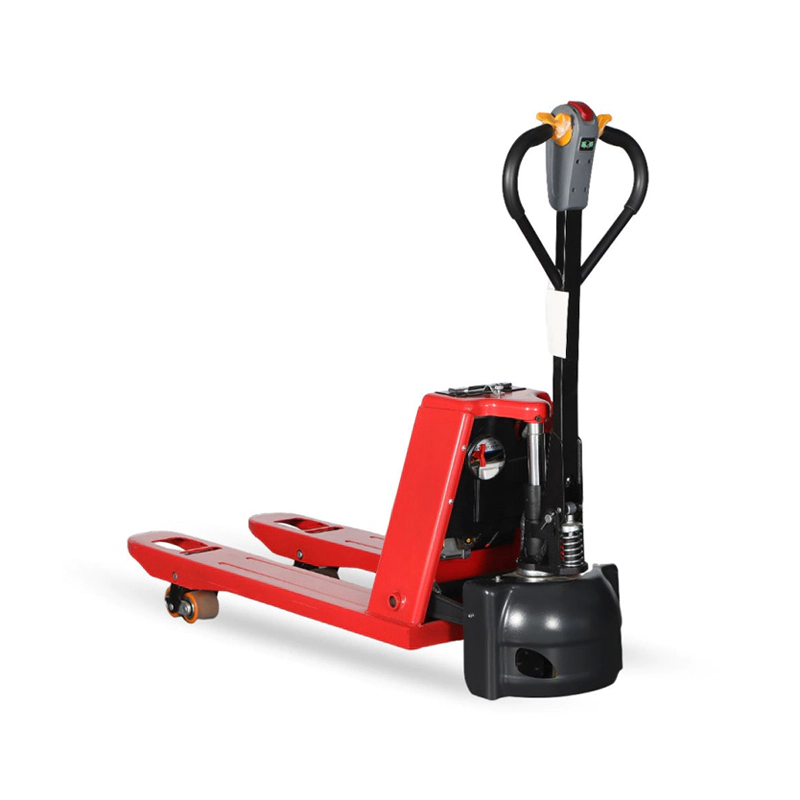
For mixed workflows, many operations keep manual trucks for tight spaces and use powered units for long runs. Compare semi-electric and electric pallet truck options if you want a powered alternative.
Powered equipment adds charging infrastructure, battery maintenance, and higher upfront cost. That is why the decision should be based on measured distances and cycles, not on habit. A warehouse that genuinely needs only 20-meter moves does not benefit from replacing every manual unit with a powered model.
Matching the Model to Your Operating Environment
Once the core specs are clear, the next step is to choose the right family variant. The environment, not the nameplate, is the deciding factor.
Standard Manual Pallet Truck for General Warehouse Work
The most common configuration is a 2.0 to 2.5 ton truck with 1,150 to 1,220 millimeter forks and 520 to 550 millimeter fork width. It is light enough to maneuver in racks, strong enough for mixed goods, and simple to maintain. A model such as the SBC20 manual pallet truck is suited to this role, with a rigid frame and smooth pump action for daily order filling and loading bays.
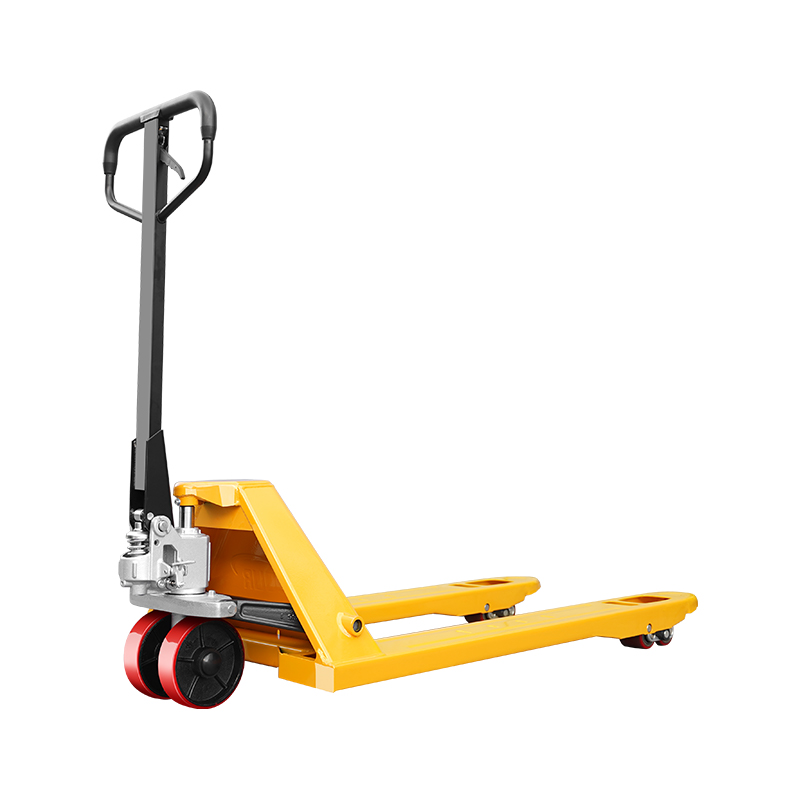 Custom Manual pallet truck SBC20 Manufacturer, CompanyHangzhou Viilift Industrial Equipment Co., Ltd. is China Custom Manual pallet truck SBC20 Manufacturer and Company,This is a common hydra...View Product →
Heavy-Duty Manual Pallet Truck for Demanding Loads
Heavy industrial environments need extra structural margin. The SBC50 heavy-duty manual pallet truck is an example of a 5.0 ton class unit for steel coils, heavy stampings, and maintenance workshops. In this class, verify the thickness of the fork blades, the size of the hydraulic cylinder, and the quality of the welds. A heavy truck that flexes under load shortens seal life and creates steering problems.
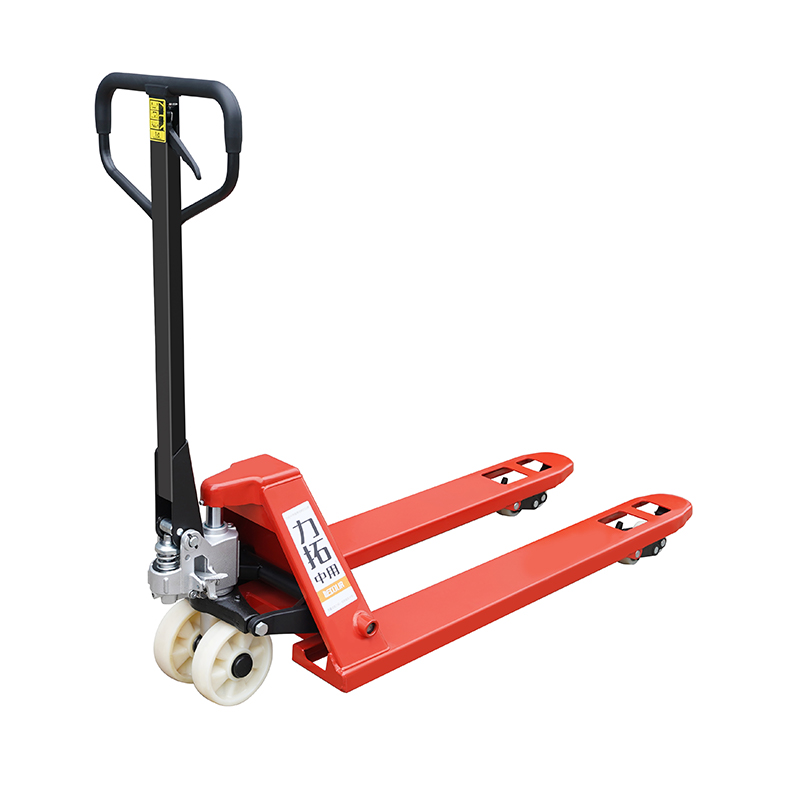 Custom Heavy-duty manual pallet truck SBC50 Manufacturer, CompanyHangzhou Viilift Industrial Equipment Co., Ltd. is China Custom Heavy-duty manual pallet truck SBC50 Manufacturer and Company,*5-10 ton s...View Product →
Stainless Steel Manual Pallet Truck for Hygiene and Corrosion
Food, beverage, pharmaceutical, and chemical operations require equipment that can handle washdown and aggressive substances. The SBC20304 stainless steel manual pallet truck is built for those zones, with corrosion-resistant surfaces and simpler cleaning. Check whether the wheels, pins, and hydraulic components are also protected, because a stainless frame with standard steel fasteners will not survive repeated washdown.
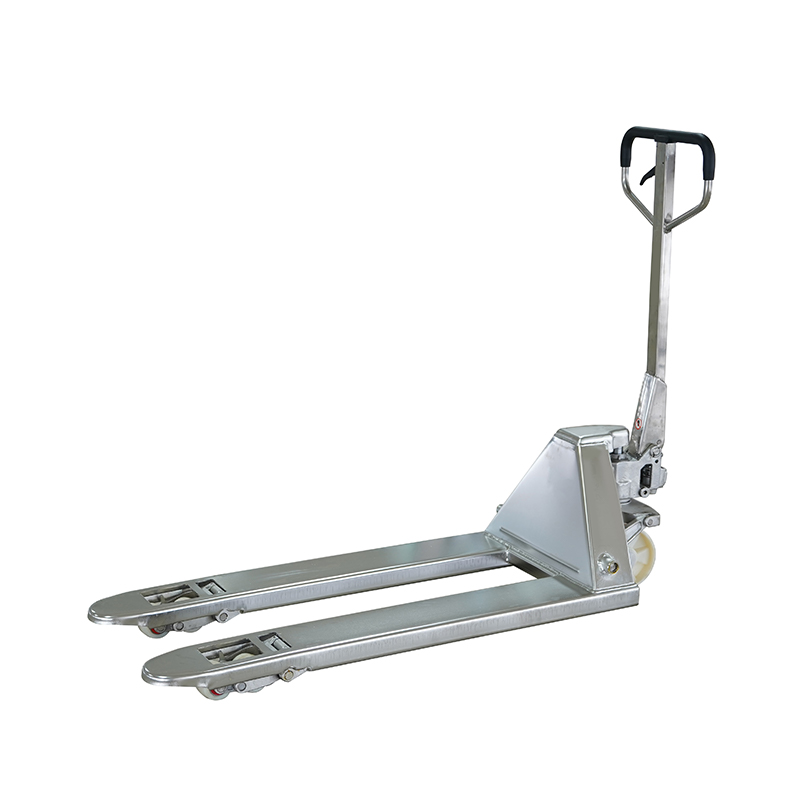 Custom Stainless steel manual pallet truck SBC20-304 Manufacturer, CompanyHangzhou Viilift Industrial Equipment Co., Ltd. is China Custom Stainless steel manual pallet truck SBC20-304 Manufacturer and Company,Hi...View Product →
Beyond these three families, low-profile models solve low-clearance pallets, extended forks suit oversized loads, and ultra-short versions handle narrow trailers and confined staging areas. These special-shaped trucks are frequently customized to a specific pallet drawing, so it is wise to send the pallet dimensions before ordering.
Safety, Maintenance, and Total Cost of Ownership
Manual pallet trucks are simple, but they still require discipline. Operators should never ride on the fork or push loads that exceed the rated capacity. On a slope, keep the loaded pallet uphill and use the release lever to control descent. Keep hands and feet away from the fork and the steering area while the truck is moving.
Daily checks take only a few minutes:
- Pump the handle: the fork should rise smoothly without grinding or excessive resistance.
- Pull the release lever: the fork should lower evenly, not drop suddenly.
- Inspect wheels: look for cracked wheels, embedded debris, and loose axles.
- Check forks for bending, cracks, or worn entry edges.
- Listen for hydraulic leaks around the cylinder and hoses.
Maintenance is inexpensive compared with other equipment, but a damaged pump or bent fork is a safety risk. Replace worn wheels and seals in pairs, use the correct hydraulic oil, and keep the truck clean. Because there is no motor, battery, or electronic controller, the total cost of ownership is usually the lowest of any powered or semi-powered pallet truck.
Why a Full-Variant Manufacturer Makes the Sourcing Process Easier
Buyers who work directly with a manufacturer can specify fork lengths, widths, wheel materials, and frame colors instead of adapting a standard imported model to their operation. The manual pallet truck range covers standard, heavy-duty, low-profile, stainless steel, and special-shaped models, which gives a warehouse a single supplier for most of its manual handling needs. This also simplifies spare parts, service information, and documentation.
To compare standard and custom configurations before purchase, download the manual pallet truck brochures from the site. Those documents list frame details and available options, and they help procurement teams collect the exact dimensions needed for a new purchase order.
Start with the pallet, measure the floor, and then choose the variant. That sequence gives you a manual pallet truck that earns its place in the operation from the first shift.