
 English
 Deutsch
 Español
 Français
 Беларуская

Moving the same 150 kg container from a pallet to a workbench thirty times a shift stops being a strength problem and becomes a repetition problem: backs strain, cycle times drift, and one careless lift puts the load, or the operator, at risk. An electric lift platform truck addresses this directly. It carries the load on a flat deck and raises or lowers that deck with battery power, so the operator always works at the height the next task demands instead of bending or reaching. As a working rule, operations running more than about 30 lift-and-lower cycles per shift, or regularly handling loads above 100 kg, see the fastest payback from choosing an electric model over a manual one.
What an Electric Lift Platform Truck Actually Is
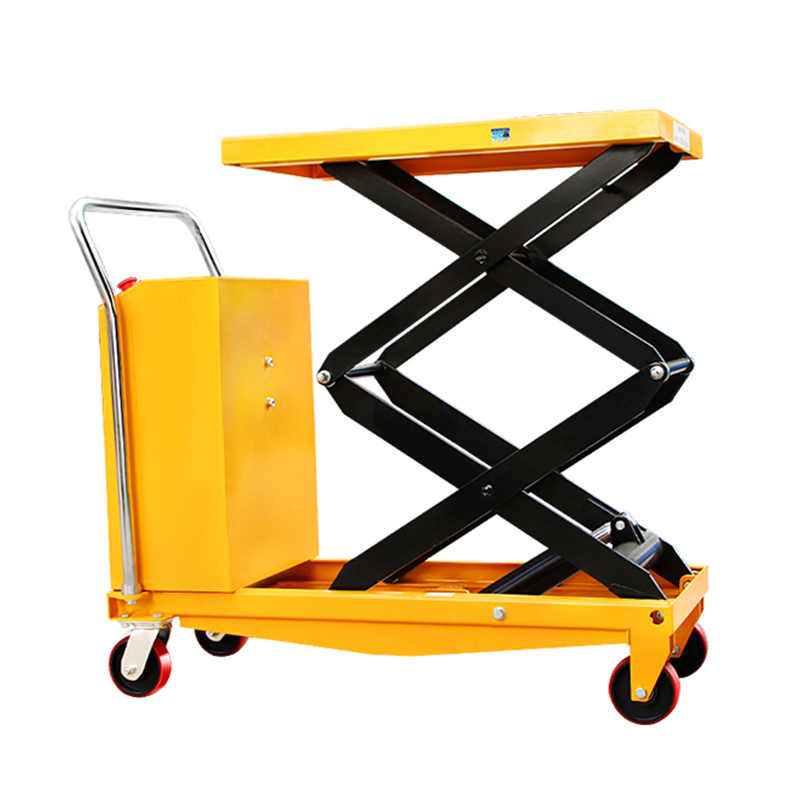
An electric lift platform truck is a wheeled cart with a powered lifting mechanism between the chassis and the platform deck. An electric motor drives either a compact hydraulic pump or a linear actuator, and in the common scissor design the pump extends the linkage to raise the deck. The operator steers through a tiller handle, presses a button or paddle to lift and lower, and rolls the load between workstations with the platform held at whatever height the job requires.
Three comparisons make the format easy to place:
- A pallet truck carries loads on forks sized for pallet openings. A platform truck uses a flat deck, so it handles crates, bins, drums, tooling, and irregular items that forks cannot pick up.
- A stacker is built to store pallets on shelving and commonly reaches 1.6 m to 3 m or higher. A platform truck usually works between roughly 0.3 m and 1.5 m, where the goal is ergonomic working height rather than storage height.
- A fixed lift platform is installed at one permanent position, such as a dock-to-floor gap. A platform truck is mobile, so a single unit can serve several workstations across a shift.
Capacities for this class of equipment commonly sit between 150 kg and 500 kg, and deck heights drop to a few centimeters for easy loading before rising to bench height for processing. The product below is a representative example of the format.
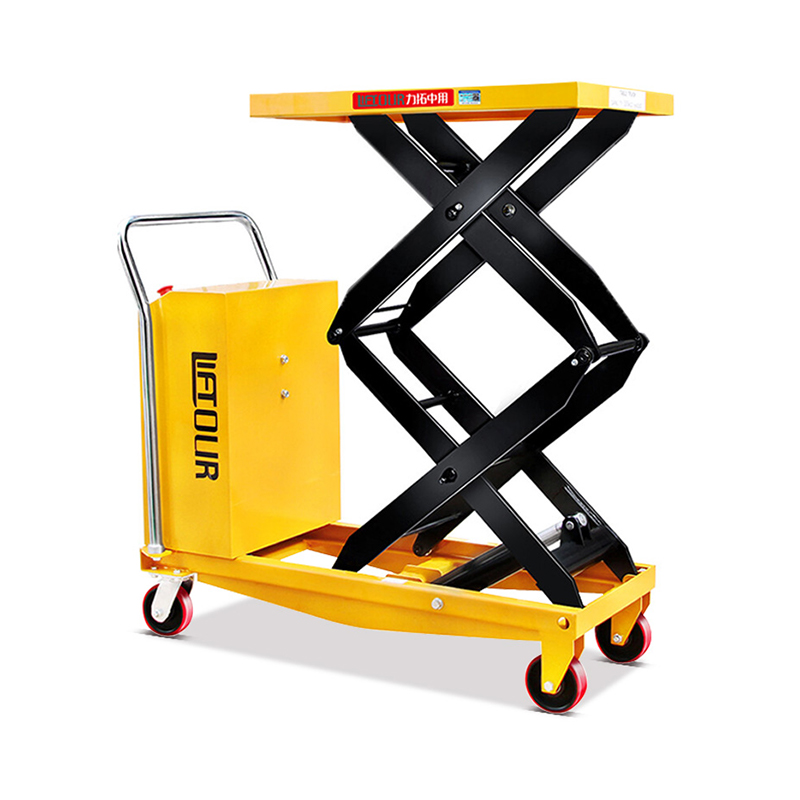 Electric Lift Platform Truck for Repeated Short-Loop LiftingAn electric scissor lift truck suited to frequent lift-travel-unload cycles, with push-button lifting, overload protection, and durable components, making it a representative choice for short repetitive material handling loops.View Product →
Where an Electric Lift Platform Truck Earns Its Keep
The equipment shows its value wherever a load must change height repeatedly within one short loop: lift, travel a few meters, unload, return. Four patterns cover most installations.
Workbench and packing stations
Raise totes and pallets to bench height so staff pick, sort, and pack standing upright instead of stooping over a deck at 100 mm.
Machine tending and die changes
Feed raw stock to presses and CNC tables, or position heavy dies and fixtures at machine height before sliding them into place.
Order picking and putaway
Use the deck as a mobile work table to build or break down mixed orders at a comfortable level, then roll the result onward.
Labs, offices, and clean areas
A battery platform runs quietly, produces no exhaust, and turns in narrow aisles where counterbalance forklifts cannot operate.
Electric, Manual, or Fixed: Choosing the Right Variant
Before comparing individual models, decide which variant your flow actually needs. The logic across the product category is consistent: manual for occasional lifts, electric for repeated daily cycles, and fixed installation when the lifting point never moves.
| Variant | How the deck lifts | Best fit | Watch-outs |
|---|---|---|---|
| Manual lift platform truck | Foot-pump hydraulic or hand winch | Occasional lifts, under roughly 20 cycles per shift, or sites without charging points | Slow cycles; operator effort rises quickly with load weight and lift frequency |
| Electric lift platform truck | Battery-driven hydraulic pump or linear actuator | 30 or more cycles per shift, loads above 100 kg, ergonomic or clean-area requirements | Needs charging discipline; higher purchase price than a manual unit |
| Fixed lift platform | Installed electro-hydraulic unit, often pit-mounted | One permanent lifting point such as a dock-to-floor gap or a line-side feed station | No mobility; installation may involve floor or civil work |
If your team lifts only a few times a day and a charging routine is not practical, the manual variant keeps ownership simple.
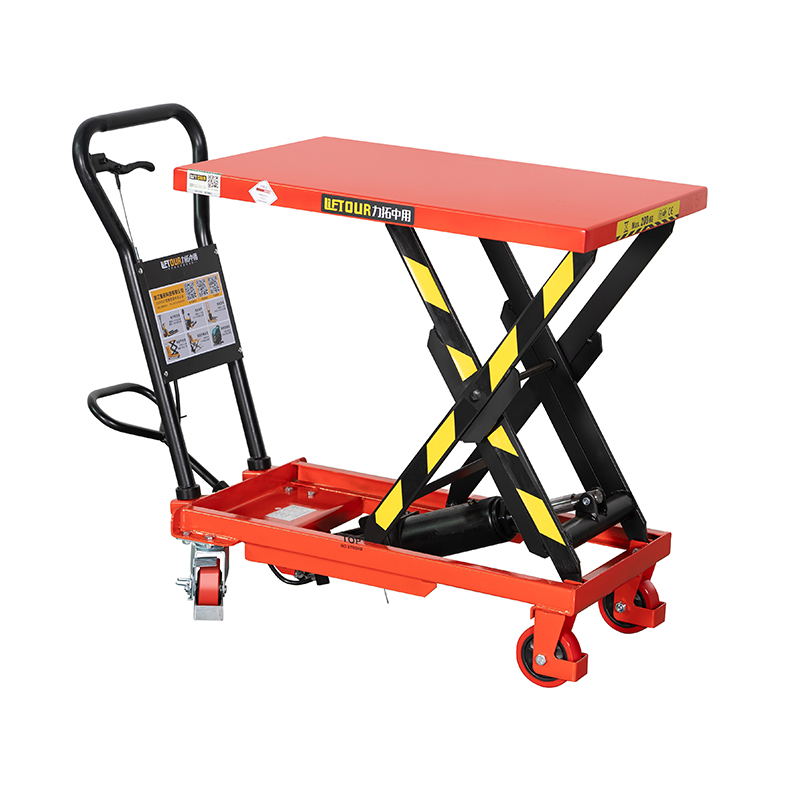 Manual Lift Platform Truck for Low-Frequency LiftingWith foot-pedal lifting, controlled lowering, and capacities up to 2000 kg, this manual scissor platform avoids charging routines entirely, offering a practical option where lifts happen only a few times a day.View Product →
When the lifting point is permanent — a dock, a pit, or the end of a conveyor line — an installed platform carries heavier ratings than any mobile unit.
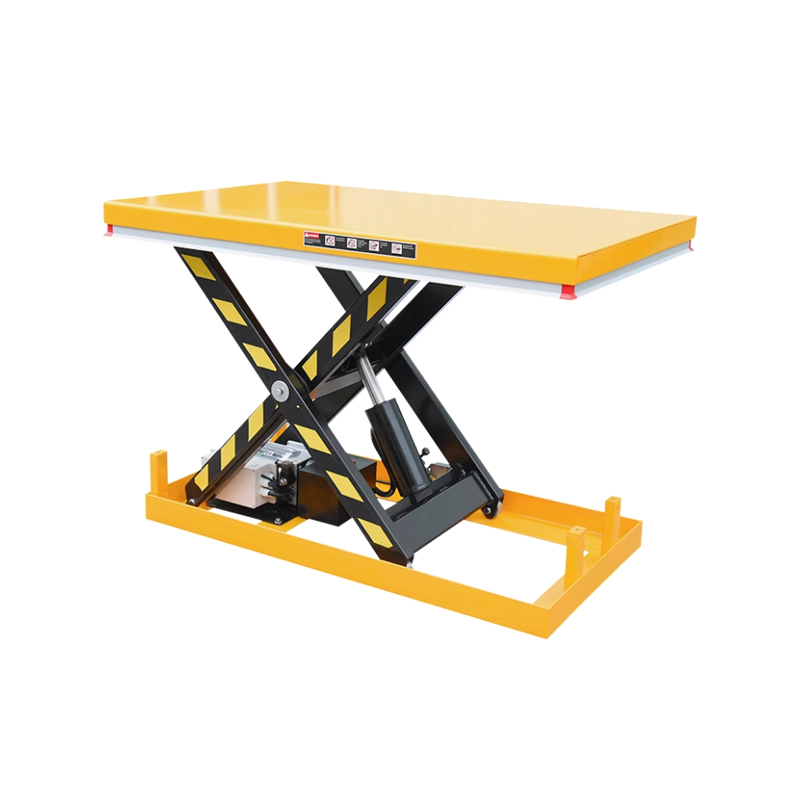 Fixed Lift Platform for Permanent Lifting PointsInstalled at docks, pits, or conveyor endpoints, this fixed scissor platform offers customizable capacities, platform sizes, and motorized lifting with anti-pinch protection, carrying heavier ratings than any mobile unit.View Product →
Specs to Check Before You Buy
Once the variant is settled, these five specifications decide whether a specific model fits your process or fights it:
- Capacity and load center. Rate the truck for the heaviest real load plus any pallet or fixture, and remember that an off-center load reduces effective capacity.
- Lowered and raised deck height. The lowered height must match your hand pallet truck clearance or ground-loading method; the raised height must reach the bench, machine table, or vehicle bed you feed.
- Deck size and options. Check length and width against your largest item, and confirm whether the job needs a guardrail, roller top, or rotating deck.
- Battery and charger. Compare lifts per charge against your real shift volume, look for a visible charge indicator, and check whether the charger is onboard; maintenance-free batteries remove watering from the care routine.
- Wheels and floor condition. Low-profile chassis wheels expect smooth concrete, so note thresholds, dock plates, and any ramps between workstations before ordering.
Safe Operation and Everyday Care
A platform truck is lifting equipment first and a cart second, and a few habits keep it safe over years of service. Keep every lift within the capacity plate rating, and keep hands and feet clear of the scissor mechanism while the deck moves. Travel with the deck fully lowered, park with the brake applied whenever the truck is left unattended, and never allow riders on the platform unless the design explicitly permits it. Charge batteries in a ventilated area, and inspect the hydraulic system for leaks at whatever interval your maintenance schedule sets. For a fuller checklist, our guide to key safety tips for using a lifting platform covers pre-use checks, load handling, and parking practice in more detail.
Frequently Asked Questions
How much capacity do I actually need?
Add the weight of the heaviest item, the pallet or fixture it sits on, and any container, then leave roughly a 20 percent margin. A truck rated close to that combined figure will spend its life at the limit of the capacity plate, which shortens hydraulic life and creates a safety risk.
How long does the battery last on one charge?
Run time depends on battery capacity and how often the deck is raised. Light to moderate lifting, a few dozen cycles per shift, normally stays within one charge, but confirm lifts per charge with the supplier against your real cycle count rather than relying on a generic figure.
Can it travel across ramps or rough ground?
Platform trucks of this type are designed for smooth indoor floors. Short, gentle ramps between rooms are usually manageable with the deck lowered, but sustained slopes, gravel, or yard surfaces call for equipment built for rough terrain rather than a standard platform truck.
What is the difference between this and a high-lift truck?
A high-lift truck still works with pallet forks and is built to lift pallets clear of the floor for stacking or access. A lift platform truck replaces the forks with a flat deck, which suits items without pallet openings, and generally keeps lift heights in the working-height range.
Dimensioned drawings, full specification tables, and option lists for every variant are collected in our lifting platform vehicle brochure. If your deck size, lift height, or load shape sits outside the standard ranges, send your actual dimensions with the inquiry — non-standard decks and lift heights are a routine customization in this category rather than an exception.