
 English
 Deutsch
 Español
 Français
 Беларуская

Content
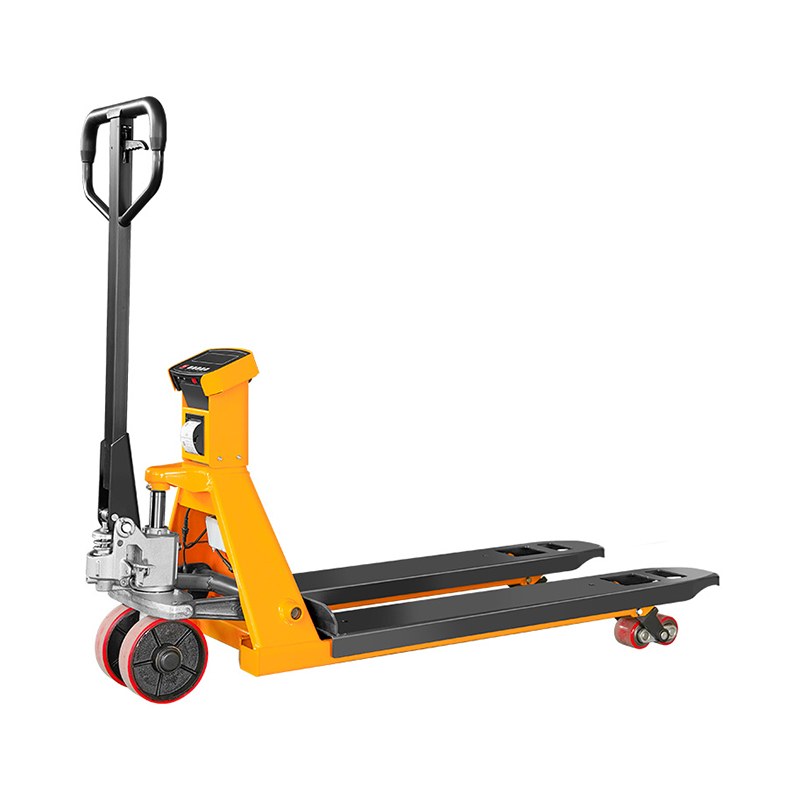
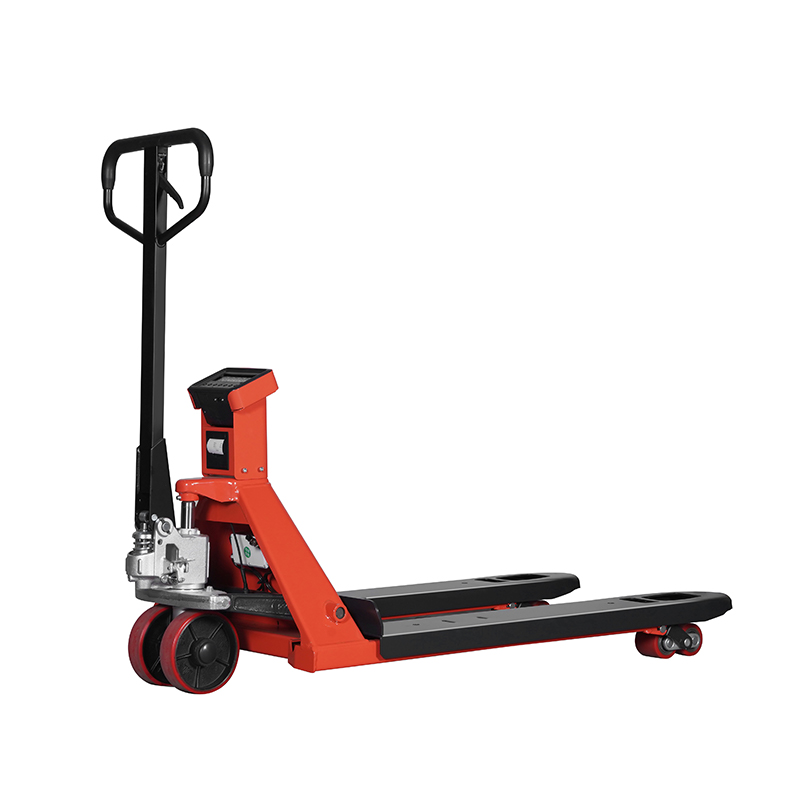
Every weighing pallet truck contains a built-in contradiction. The machine is built to be pushed across dock plates, nudged against racking and loaded in a hurry, yet it must also protect a precision measuring element that one careless lift can ruin. Overload protection in scale pallet trucks is what resolves that conflict, and it works through mechanical stops, hydraulic relief, load cell selection, sealing and operating discipline rather than through any single clever feature.
This guide explains how load cells fail, which protective measures are worth paying for, and how to build an inspection routine that keeps weighing accuracy stable for years rather than months.
Why Load Cells Are the Weakest Link on a Weighing Pallet Truck
A load cell is a machined metal body with strain gauges bonded to it. When the body flexes under load, the gauges change resistance and the indicator converts that change into kilograms. The design assumes the metal returns to exactly the same shape once the load is removed. Anything that permanently bends, twists or contaminates the body changes the calibration, and because the change is rarely linear, re-zeroing the indicator cannot repair it.
Overload and impact are different problems
Static overload develops slowly: a 2,500 kg load placed on a truck rated for 2,000 kg deflects the cell past its safe range and the output drifts. Impact damage happens in milliseconds, when a pallet is dropped onto the forks or the truck strikes racking. Impact is the far more common cause of premature failure, so protection has to be mechanical as well as electronic.
The three impact forces that damage load cells
- Vertical shock: dropping a loaded pallet onto the forks from a few centimetres sends a force spike several times the static weight through the cell.
- Side and torsional impact: hitting racking, door frames or another truck twists the fork frame and loads the cell in a direction it was never designed to measure.
- Off-centre loading: a pallet resting on one fork tip creates a bending moment that can exceed the rated capacity while the total weight on the truck looks entirely normal.
A cell rated at 2,000 kg is not protected by a 2,000 kg limit alone. A 300 kg pallet dropped 100 mm can produce a force peak well above the safe range. The peak lasts milliseconds, but the deformation it leaves behind is permanent.
| Failure mode | Typical trigger | Early warning sign | Prevention |
|---|---|---|---|
| Zero drift | Repeated vertical shock | Indicator will not hold zero after unloading | Hard end stops, controlled pallet placement |
| Non-linear readings | Static overload past the safe range | Light loads read correctly, heavy loads under-read | Capacity discipline, overload alarm |
| Erratic output | Moisture ingress | Unstable readings in humid areas | Sealed load cells and junction box |
| Bent mounting | Side impact with racking | Forks out of level, gap at the cell mount | Fork guards, slow approach speeds |
How Overload Protection Is Engineered Into Scale Pallet Trucks
Protection is layered. Each layer catches a different failure mode, and no single feature is sufficient on its own.
Mechanical end stops and frame rigidity
Well-built weighing trucks limit fork travel with hard stops so the load cell can never be compressed beyond its safe deflection, and the fork frame is stiffened so a load placed on one side is shared between cells instead of concentrated on one. When you compare trucks, look at how the cell is mounted: a cell sitting in a machined pocket with a positive stop is far better protected than one bolted flat to an unsupported plate.
Hydraulic pressure relief
A relief valve limits the maximum hydraulic pressure the pump can generate. That stops an operator from pumping up a load beyond the truck rating and protects the lift mechanism from being forced past its mechanical limit. The relief setting should be verified during routine service, not only at commissioning.
Load cell selection and sealing
Cell capacity is normally chosen above the truck rating to leave headroom for dynamic peaks. Sealing matters just as much: an IP-protected cell with a sealed junction box survives washdown and cold-store conditions that would destroy an open design. In food, pharmaceutical and chilled applications, moisture ingress causes more failures than overload does.
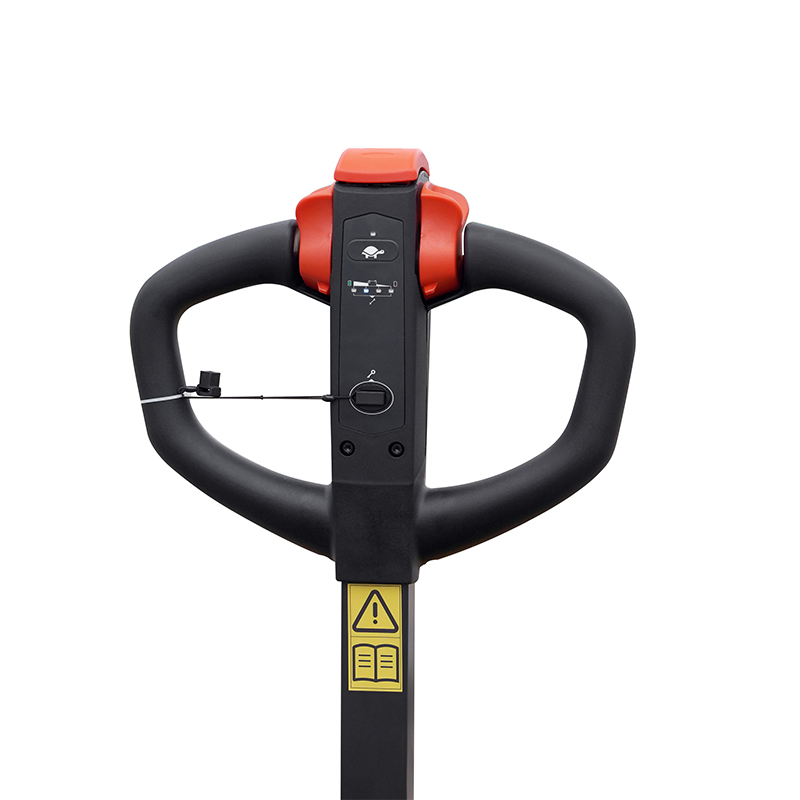 CBD-C Electric Weighing Pallet Truck SeriesFully electric walkie pallet truck with integrated weighing, 1500–2500 kg capacities, and 0.1 kg accuracy; powered travel and lift reduce manual handling jolts.View Product →
Powered weighing trucks add another layer by governing lift and travel speed, which limits the impact energy an operator can introduce. An electric weighing pallet truck such as the CBDC series combines powered travel with an integrated scale, so the platform is not exposed to the same manual jolts as a hand-pumped unit.
Operating Practices That Prevent Impact Damage
Most load cell failures trace back to a handful of habits. These are the ones worth enforcing on the warehouse floor.
- Lower the forks fully to the floor before sliding them into a pallet, and never ram them into the entry.
- Set the pallet down under control instead of letting it drop.
- Keep loads centred and within the rated capacity, including the weight of the pallet itself.
- Approach racking and door frames at walking speed with the load carried low.
- Never use the truck as a lever or a jack to reposition a stuck pallet.
- Do not aim a high-pressure wash jet at the load cell, junction box or indicator.
| Common mistake | Effect on the load cell | Better practice |
|---|---|---|
| Dropping pallets from height | Shock peak several times the static weight | Lower the load to within a few millimetres before release |
| Weighing on uneven floors | Uneven cell loading and zero drift | Weigh on level, hard surfaces only |
| Overloading once to finish a job | Permanent deformation of the cell body | Split the load or use a higher-capacity truck |
| Ignoring a bent fork tip | Continuous side load on the cell | Withdraw the truck from weighing service and inspect |
Inspection, Calibration and Service Routine
A short scheduled routine catches most damage before it becomes a calibration problem. The intervals below suit single-shift work; double-shift sites should shorten them.
| Interval | Task | What to look for |
|---|---|---|
| Daily | Visual check of forks, mounts and cabling | Cracks, bent tips, exposed wiring, loose fasteners |
| Daily | Zero check with the forks empty | Indicator returns to zero and holds a stable reading |
| Weekly | Test with a known reference weight | Reading inside the stated tolerance |
| Monthly | Check lift operation and relief behaviour | Smooth lift, no creep, no override of the stop |
| Quarterly | Full calibration check and connector inspection | Traceable accuracy, no corrosion in the junction box |
A truck that fails a check should leave weighing service immediately. A damaged scale that keeps producing numbers people trust is more dangerous than no scale at all.
Matching the Weighing Truck to Your Load Profile
The right protection package depends on what you weigh, how often, and where.
Light, frequent weighing
Mini manual weighing trucks suit retail, courier and small-batch operations where loads are modest and aisle space is tight.
Wet, dusty or washdown environments
Three-proof and stainless steel designs are the sensible choice here. Their sealed cells and corrosion-resistant frames remove the moisture failure mode entirely, which matters more than the higher purchase price over a five-year service life.
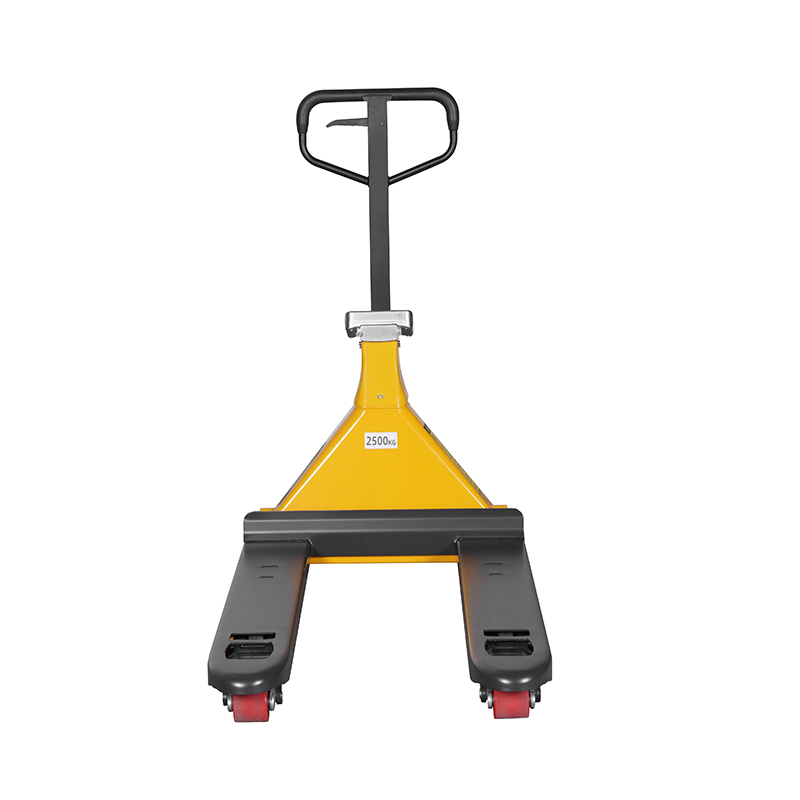 PSD20 Three-Proof Weighing Pallet TruckManual walkie weighing pallet truck with 2500/3000 kg capacities, 0.1 kg accuracy, and waterproof, dustproof instrument for damp handling areas.View Product →
Loads that also need lifting
Where a pallet has to be raised to a working height as well as weighed, a weighing lifting platform truck keeps the scale inside the platform instead of adding a separate floor scale that consumes space and can be driven over.
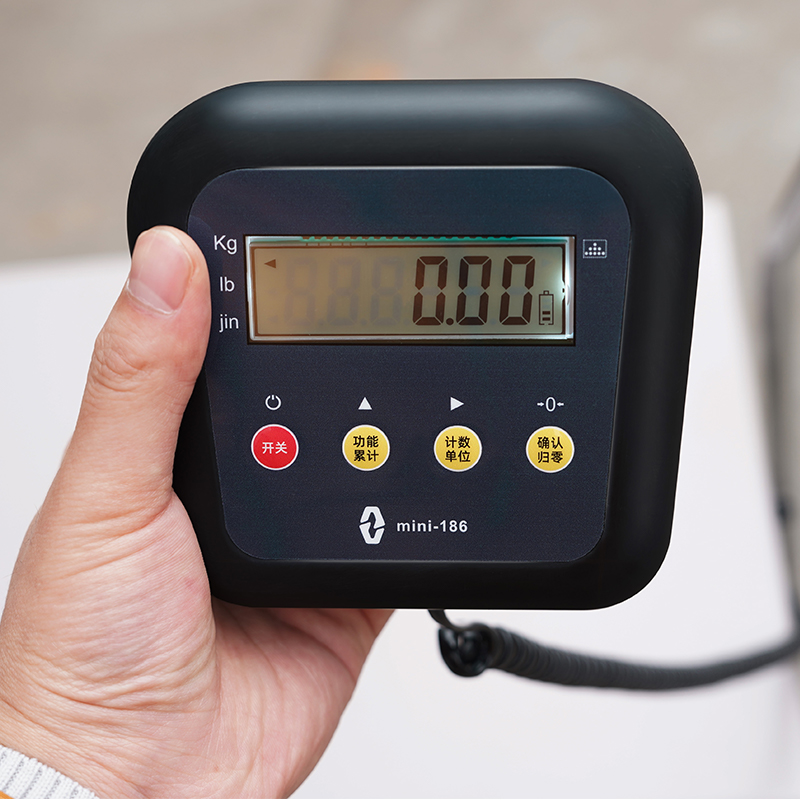 CPT300 Weighing Manual Lifting Platform TruckScissor-lift platform truck with built-in weighing for raising and moving loads; manual or hydraulic lifting options in multiple capacities.View Product →
Whichever configuration you choose, compare cell capacity, sealing rating, mounting design and spare-part availability before comparing price. Specification sheets are collected in the weighing scale pallet truck brochure library, and a practical view of where integrated weighing pays off appears in our article on the benefits of using a weighing scale pallet truck.
Frequently Asked Questions
Q1: What causes most load cell failures on weighing pallet trucks?
Impact rather than gradual overload. Dropped pallets, side impacts with racking and off-centre loads cause most premature failures, which is why mechanical stops and operator habits matter as much as electronics.
Q2: Does an overload alarm protect the load cell?
Only partly. The alarm warns the operator and logs the event, but it reacts after the force has already passed through the cell. Real protection comes from the mechanical stop and from capacity headroom.
Q3: Can a damaged load cell be recalibrated?
Only if the deformation is elastic and the body has not been structurally altered. Once a cell is permanently bent or corroded, recalibration may appear to work at low loads while heavy readings stay wrong.
Q4: How often should a weighing pallet truck be calibrated?
Carry out a zero and reference-weight check daily or weekly, a full calibration check quarterly, and a professional service annually. Any truck involved in an impact should be re-checked immediately.
Q5: What capacity should I choose for a new truck?
Choose a scale capacity above the heaviest load you actually handle, including pallet weight, and leave headroom for dynamic peaks. A truck that is only just adequate in static terms has no reserve for real shock loads.
Overload protection is not a component that can be specified once and forgotten. It is the sum of a rigid frame with positive stops, a correctly rated cell, proper sealing, sensible hydraulics and the habits of the people who use the truck every shift. Get those elements right and a weighing pallet truck will hold its accuracy through years of hard handling. Neglect one of them and the load cell will find the weak point for you.