
 English
 Deutsch
 Español
 Français
 Беларуская

Content
- 1 Basic Overview and Core Working Principle of Electric Pallet Stacker
- 2 Key Structural Components and Functional Advantages
- 3 Main Application Scenarios and Industry Adaptability
- 4 Standard Operating Specifications and Safety Guidelines
- 5 Daily Maintenance and Service Life Management
- 6 Selection Reference for Electric Pallet Stackers
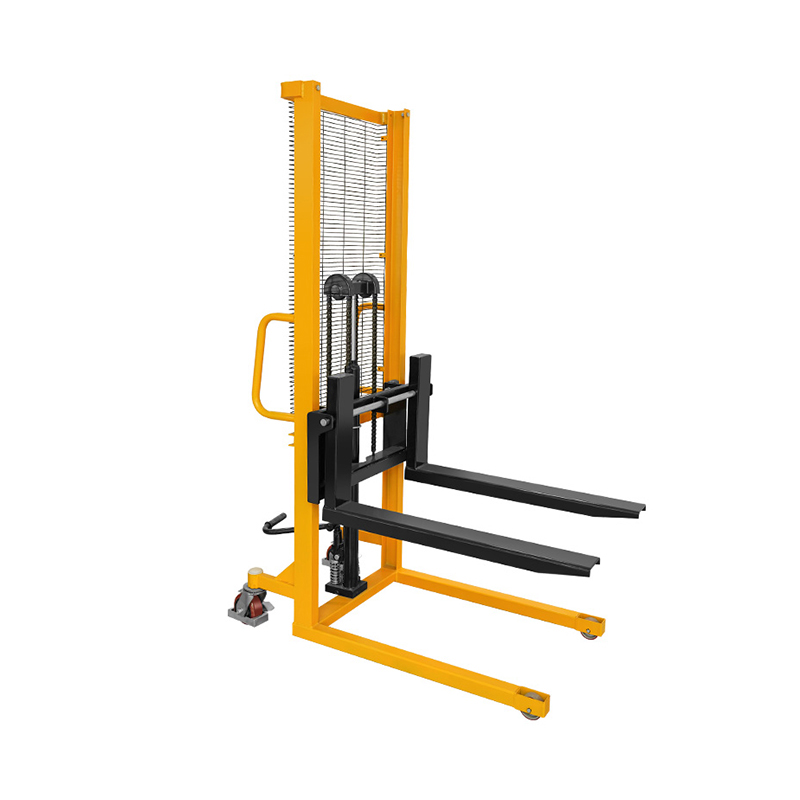
Electric pallet stackers are efficient, energy-saving, and safe industrial material handling equipment designed for palletized cargo stacking, lifting, and short-distance transportation. They replace manual and fuel-powered handling tools, greatly improving warehouse operation efficiency, reducing labor intensity, and lowering operational safety risks. Suitable for most indoor logistics scenarios, they have become standard equipment for modern warehousing, retail distribution, and manufacturing workshop storage management.
Basic Overview and Core Working Principle of Electric Pallet Stacker
An electric pallet stacker is a battery-powered industrial handling device dedicated to pallet cargo operation. Different from manual pallet trucks that rely on human force and internal combustion stackers that use fuel power, all walking, lifting, and stacking actions of electric pallet stackers are driven by electric motors and hydraulic systems. This equipment focuses on solving the cargo handling and stacking needs of indoor narrow spaces and medium and low-height storage scenarios, filling the efficiency gap of manual handling and the cost gap of large forklifts.
The core working principle of the electric pallet stacker is based on the coordination of an electric drive system and a hydraulic lifting system. The storage battery provides stable power output to drive the walking motor and hydraulic motor. The walking motor controls the forward, backward and steering movement of the equipment, while the hydraulic motor pushes the hydraulic cylinder to drive the fork up and down to complete cargo lifting and stacking. Equipped with intelligent control components, the equipment can realize stepless speed regulation and stable lifting, avoiding the jitter and impact easily caused by manual operation.
In actual operation, the equipment maintains a highly stable working state. Most standard electric pallet stackers can achieve a stable lifting operation with a load rate of 80%–90% of the rated load, ensuring no tilt or jitter of pallet cargo during lifting and moving. This stable working performance is the core reason why it is widely used in precision cargo storage scenarios.
Key Structural Components and Functional Advantages
Main Structural Components
The electric pallet stacker adopts an integrated modular structure, and each core component undertakes independent functional responsibilities and cooperates with each other to ensure the overall operation effect. The core components include power system, hydraulic lifting system, walking drive system, control system and safety protection system.
- Power system: Mainly composed of maintenance-free batteries and power controllers. It provides continuous and stable DC power for the equipment, with the characteristics of low noise and zero exhaust emission during operation, which meets indoor environmental protection operation standards.
- Hydraulic lifting system: Consists of hydraulic pumps, hydraulic cylinders, oil circuits and control valves. It converts electric energy into hydraulic pressure energy to realize the vertical lifting of the fork, with accurate lifting height control and small error.
- Walking drive system: Includes drive motors, reduction gears and walking wheels. It realizes flexible walking and steering of the equipment, adapting to narrow channel operation environments.
- Safety protection system: Equipped with anti-slip braking device, overload protection device, emergency stop button and anti-collision structure, which can automatically cut off power and stop operation in case of overload, collision or misoperation.
Core Functional Advantages
Compared with traditional manual stackers and fuel-powered handling equipment, electric pallet stackers have obvious comprehensive advantages in efficiency, cost and safety. First of all, in terms of operation efficiency, electric drive replaces manual force, which can improve single-person handling efficiency by more than 3 times, and can work continuously for a long time without manual fatigue.
Secondly, in terms of operation cost, the daily power consumption cost of electric pallet stackers is far lower than the fuel cost of internal combustion equipment, and the modular structure reduces the failure rate and maintenance frequency of parts, effectively reducing later operation and maintenance costs. In addition, the whole machine operates without exhaust gas and low noise, which will not cause environmental pollution and noise interference to the indoor working environment, and is suitable for closed workshop and high-standard warehouse scenarios.
Moreover, the equipment has high operation flexibility. The compact body design can adapt to narrow warehouse channels, and the flexible steering function can complete cargo stacking and handling operations in a small space, making full use of warehouse storage space and improving the space utilization rate of the warehouse.
Main Application Scenarios and Industry Adaptability
Electric pallet stackers are highly adaptable and are widely used in multiple industries centered on logistics and warehousing. They are mainly applied to indoor operation scenarios that require frequent pallet cargo handling, stacking and short-distance turnover, and can perfectly match the lightweight and medium-duty handling needs of most enterprises.
In the logistics and warehousing industry, electric pallet stackers are the most widely used. Large and medium-sized distribution warehouses, e-commerce storage centers, and third-party logistics warehouses need to carry out a large number of pallet sorting and stacking operations every day. Statistics show that more than 60% of indoor standard warehouses take electric pallet stackers as the main handling and stacking equipment, which effectively solves the problem of low efficiency of manual high-level stacking.
In manufacturing workshops, the equipment is used for raw material warehouse storage, production line material supply, and finished product warehouse stacking. It can flexibly shuttle between workshop channels, realize rapid turnover of production materials, and ensure the continuity of production operations. At the same time, the zero-emission operation feature is very suitable for food processing, electronic manufacturing and other workshops with high environmental hygiene requirements.
In addition, retail supermarket distribution centers, cold chain storage warehouses, and pharmaceutical storage industries also widely adopt this equipment. The stable and low-noise operation will not damage fragile goods, cold chain equipment and pharmaceutical supplies, meeting the special handling standards of high-precision and special goods.
Standard Operating Specifications and Safety Guidelines
Standardized operation is the key to ensuring the service life and operation safety of electric pallet stackers. Irregular operation is the main cause of equipment failure and warehouse safety accidents. All operators need to follow unified operation specifications to carry out equipment operation.
Pre-operation Inspection Standards
Before starting the equipment every time, operators need to complete basic inspection work to eliminate potential safety hazards. The inspection content includes battery power check, hydraulic system oil leakage check, wheel flexibility check, brake sensitivity test and safety protection device integrity check. It is forbidden to start the equipment with insufficient power, faulty braking or abnormal hydraulic pressure.
Operation Process Specifications
- Before loading goods, adjust the fork spacing according to the pallet size to ensure that the fork is evenly stressed and the pallet is fully supported.
- When lifting goods, keep the equipment stationary first, lift the fork to a safe height, and then start walking to avoid cargo tilt and falling.
- During walking, keep a low speed, avoid sharp steering and sudden braking, and slow down when passing through channel intersections and crowded areas.
- It is strictly forbidden to overload the equipment for operation, and it is not allowed to carry people or stack irregular and unstable goods.
- After the operation is completed, park the equipment in the designated area, lower the fork completely, cut off the power supply, and complete the daily cleaning.
Common Safety Taboos
In daily operation, operators must avoid over-lifting, over-speed driving and long-time heavy-load standby. Overload operation will shorten the service life of hydraulic components by more than 40% and easily cause structural deformation of the fork. In addition, the equipment is only suitable for flat indoor ground operation, and it is forbidden to work on steep slopes, uneven ground and outdoor rainy environments to avoid skidding and equipment failure.
Daily Maintenance and Service Life Management
Scientific daily maintenance can effectively extend the service life of electric pallet stackers and maintain stable operating performance. The maintenance work is divided into daily maintenance, weekly maintenance and regular professional maintenance, covering power system, hydraulic system and walking system.
Daily Basic Maintenance
After daily work, operators need to clean the dust and cargo residue on the equipment surface, check whether the battery connector is loose or oxidized, and ensure the power supply is stable. At the same time, confirm that the hydraulic oil level is normal, and there is no oil leakage in the oil circuit interface. Keep the equipment parked in a dry and ventilated environment to avoid moisture corrosion of electrical components.
Regular Cycle Maintenance
Weekly maintenance focuses on checking the wear degree of walking wheels, the flexibility of steering parts and the sensitivity of braking devices. Regularly lubricate the rotating and sliding parts to reduce mechanical wear. Monthly professional inspection needs to detect the working state of the motor and hydraulic pump, calibrate the lifting accuracy of the fork, and replace aging hydraulic oil and worn parts in time.
With standardized maintenance, the comprehensive service life of electric pallet stackers can reach 5–8 years, and the stable operation state can be maintained for a long time, creating long-term value for enterprise logistics operation.
Selection Reference for Electric Pallet Stackers
Enterprises need to select appropriate electric pallet stacker models according to actual operation scenarios and cargo parameters to avoid model mismatch affecting operation efficiency. The core selection factors include load capacity, lifting height, channel width and working environment.
| Core Parameter | Standard Configuration | Applicable Scenario |
|---|---|---|
| Light Load Type | Small load, low lifting height | Small warehouse, retail storage, light cargo handling |
| Medium Load Type | Conventional load, medium lifting height | E-commerce warehouse, manufacturing workshop conventional stacking |
| Heavy Load Type | Large load, high stability | Large distribution center, heavy industrial cargo storage |
In actual selection, priority should be given to matching the load capacity with the daily average cargo weight, and reserve a certain load margin to avoid long-term full-load operation. At the same time, the minimum channel width of the equipment should match the warehouse channel size to ensure flexible operation and improve the overall warehouse operation efficiency.