
 English
 Deutsch
 Español
 Français
 Беларуская

Forty minutes per shift. That was the time a mid-sized warehouse was losing every day while one forklift shuttled pallets from the receiving dock up a ramp to a mezzanine storage level. The ramp consumed floor space, the route crossed a pedestrian aisle, and the backlog grew during peak hours. The fix was not another forklift. It was a fixed lift platform installed at the dock edge. Transfer time dropped sharply, the aisle stayed clear, and operators stopped waiting for equipment needed elsewhere. If your facility moves loads between fixed heights several times per shift, this machine deserves a serious look.
What Is a Fixed Lift Platform?
A fixed lift platform is a stationary vertical lifting device installed at one permanent position to raise, lower, or position loads. Most units use a scissor-lift mechanism driven by an electric-hydraulic power unit, while manual models exist for lighter, intermittent duty. The deck is either recessed into a shallow pit or bolted to a reinforced concrete floor, and the machine stays at that point for its entire working life. Unlike a forklift or pallet truck, it does not travel with the load; it creates a dedicated vertical transfer point exactly where the operation needs one.
That characteristic explains the benefits. A forklift ramp trip can take 90 seconds depending on traffic; a fixed lift platform completes the same vertical move in a consistent 20 to 30 seconds. Because the unit is always in the same place, operators build a rhythm around it, workflows become easier to schedule, and the forklift is freed for horizontal transport.
For a permanent installation, size the machine for the heaviest real load, not the average one.
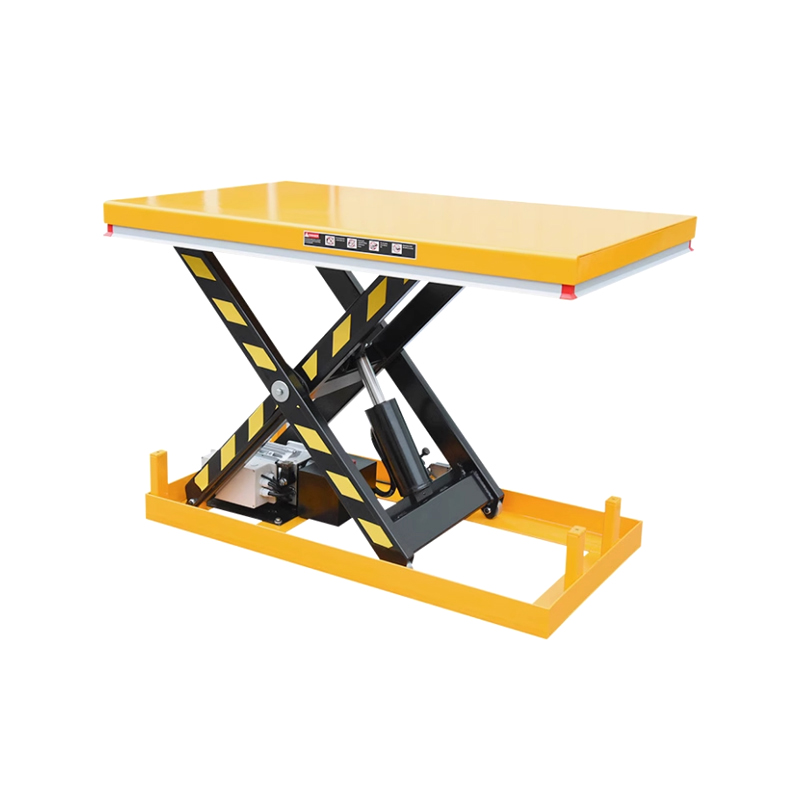
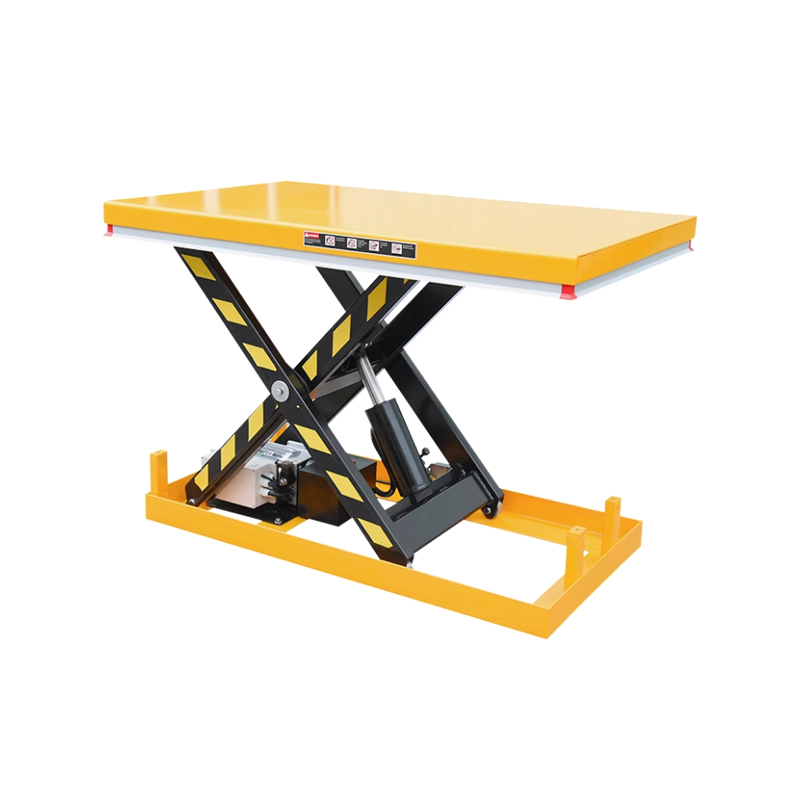 Fixed Scissor Lift Platform with Customizable Table and Anti-Pinch SafetyThis permanent scissor lift platform is sized for heavy fixed-point lifting, featuring a steel deck, reinforced cylinder, and anti-pinch descent protection for safe, repeated operation.View Product →
Viilift builds this scissor-type unit with a steel deck, non-slip surfaces, and a descent valve that lowers the deck safely if a hose fails; it suits repeated fixed-point lifting.
Fixed Lift Platform vs. Mobile Lifting Equipment
The main decision is not which brand to buy; it is whether a permanent unit or a mobile one fits the workflow. The table below compares the three configurations most buyers consider.
| Consideration | Fixed lift platform | Electric lift platform truck | Manual lift platform truck |
|---|---|---|---|
| Installation | Bolted to floor or recessed in a pit | None, ready to use | None, ready to use |
| Mobility | Stationary | Moves between stations | Moves between stations |
| Typical capacity | 1,000 - 3,000 kg and above | 500 - 1,000 kg | 200 - 500 kg |
| Power | Electric-hydraulic or manual | Battery / electric-hydraulic | Manual pump |
| Best for | High-frequency lifts at one fixed point | Several low-frequency points sharing one unit | Occasional light lifting at minimal cost |
If the lifting demand is concentrated at one point and happens many times a day, a permanent platform removes the cost of scheduling equipment and the risk of it being unavailable. If demand is scattered, a mobile unit avoids multiple installations, but an operator must bring it to each location and batteries need charging.
When the same lifting job appears at two or three points in one shift, a mobile electric unit adds flexibility without the cost of multiple permanent installations.
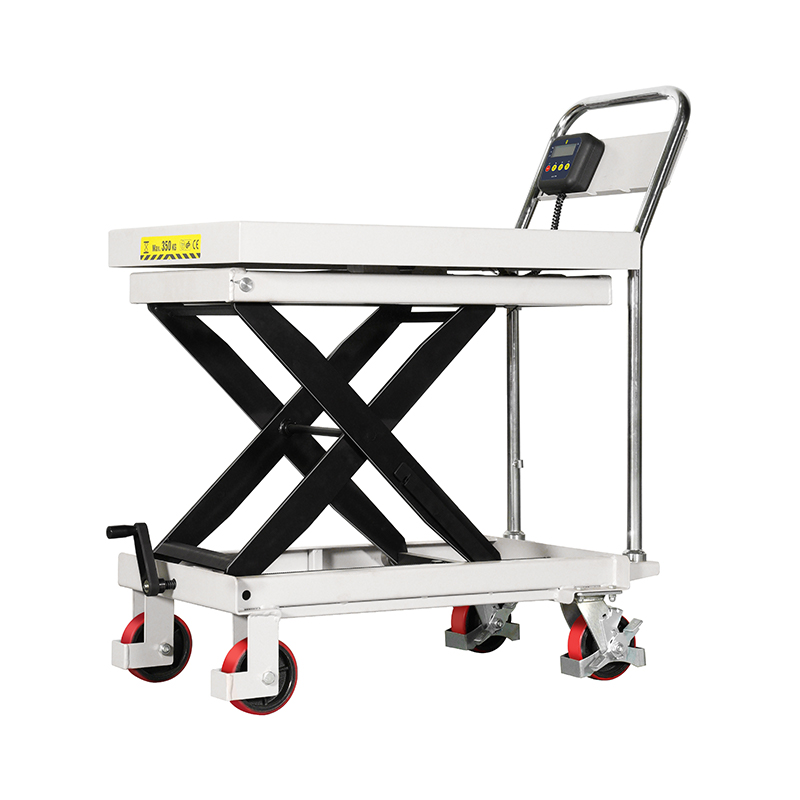
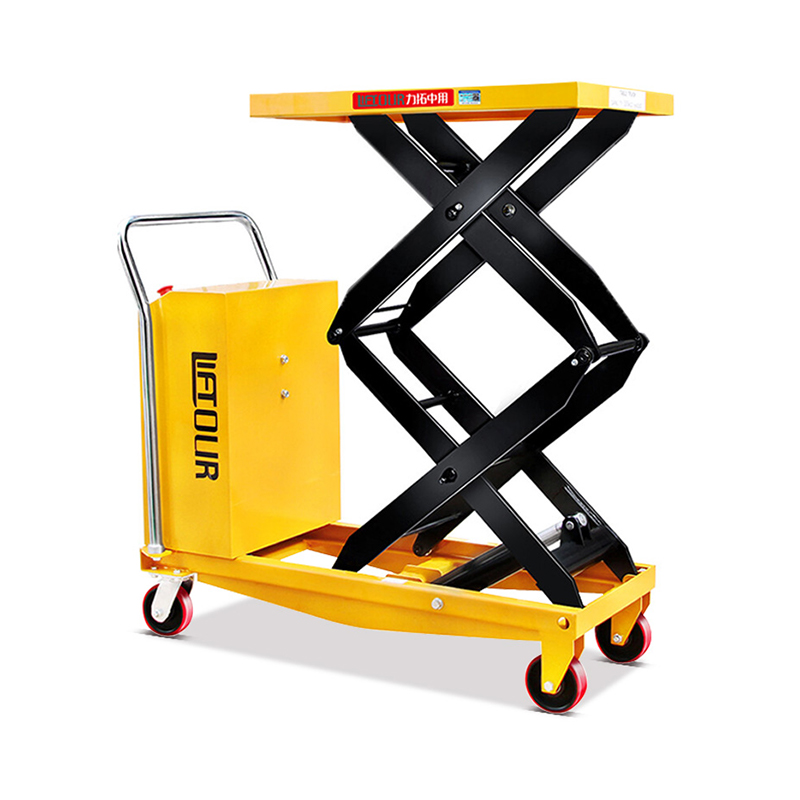 Electric Scissor Lift Platform Truck with Variable Load and Height OptionsA battery-powered mobile lift truck that complements fixed platforms, offering quick electric lifting, overload protection, and easy maneuverability for multi-station tasks.View Product →
Battery-powered models can be moved between stations and charged overnight, which makes them a natural complement to a fixed platform rather than a direct replacement.
Key Specifications to Evaluate Before Buying
Every fixed lift platform looks similar from the outside. The differences that matter are inside the specification sheet. Check these six parameters before comparing prices.
- Load capacity: Add the pallet, the load, and any handling device on the deck, then add at least 20 percent margin. A unit bought at 100 percent utilization will be undersized when your product mix changes.
- Platform size: The deck must accept the largest pallet you move. A 1,200 mm by 1,000 mm deck covers standard EUR pallets; longer or wider options suit custom loads.
- Lifting height and stroke: The distance between lowest and highest deck positions decides the scissor configuration. Short strokes fit work positioning; long strokes suit mezzanine transfers.
- Power supply: Most electric-hydraulic units accept single-phase or three-phase. Verify the voltage at the installation point; retrofitting power later adds cost.
- Controls: Hold-to-run buttons, foot switches, and remote pendants change how operators interact with the unit. Pendant control remains the common workshop choice.
- Safety equipment: Anti-fall valves, overload protection, emergency stops, toe guards, and edge protection decide how the unit behaves in abnormal conditions. These are not extras; they separate a safe machine from a liability.
Where a Fixed Lift Platform Delivers the Most Value
Fixed lift platforms appear in manufacturing, warehousing, e-commerce, automotive, and pharmaceutical facilities. The common thread is a repeated vertical move at one fixed point. These scenarios show where the return is clearest.
Loading docks
A fixed platform levels the height difference between truck bed and dock, letting pallets roll directly onto a manual pallet truck or conveyor.
Mezzanine and multi-level storage
Replacing a ramp or forklift trip with a vertical lift moves pallets between levels in a predictable cycle and keeps pedestrian routes separate.
Production line feeding
Components are lifted to working height at each station, which reduces bending, reaching, and the risk of strain injuries.
Food and pharmaceutical areas
Stainless steel decks and sealed hydraulic systems stand up to washdown cleaning and hygiene audits.
Work positioning
Heavy parts are raised to a comfortable handling height for picking, packing, or inspection, so operators do not work at floor level.
Confined spaces
A fixed unit has no turning radius. It fits into corners, shafts, and narrow bays where a forklift cannot operate.
When the workload at a secondary lifting point is light and infrequent, a permanent installation is harder to justify.
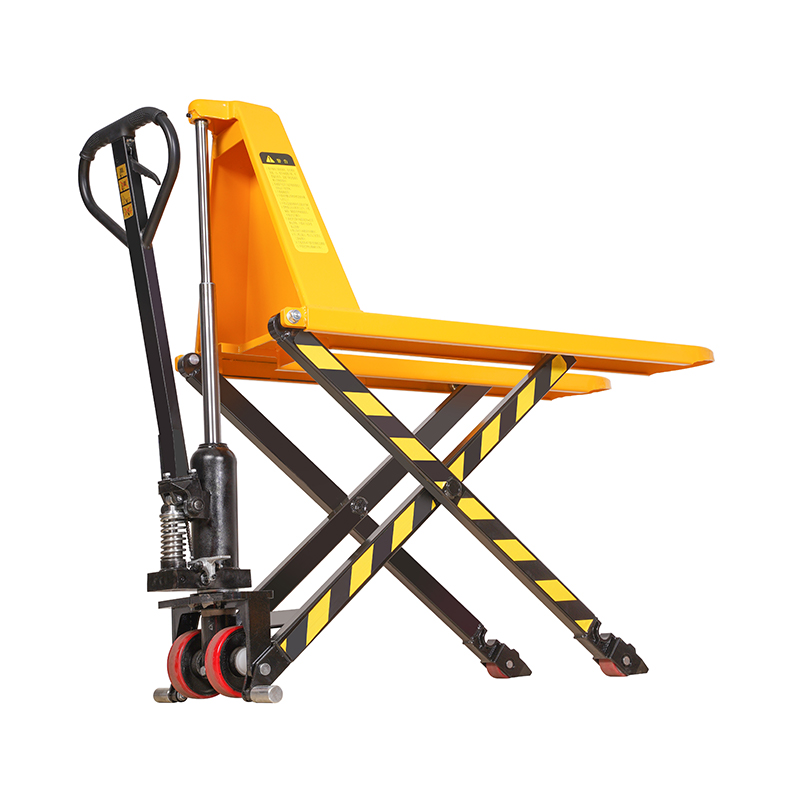
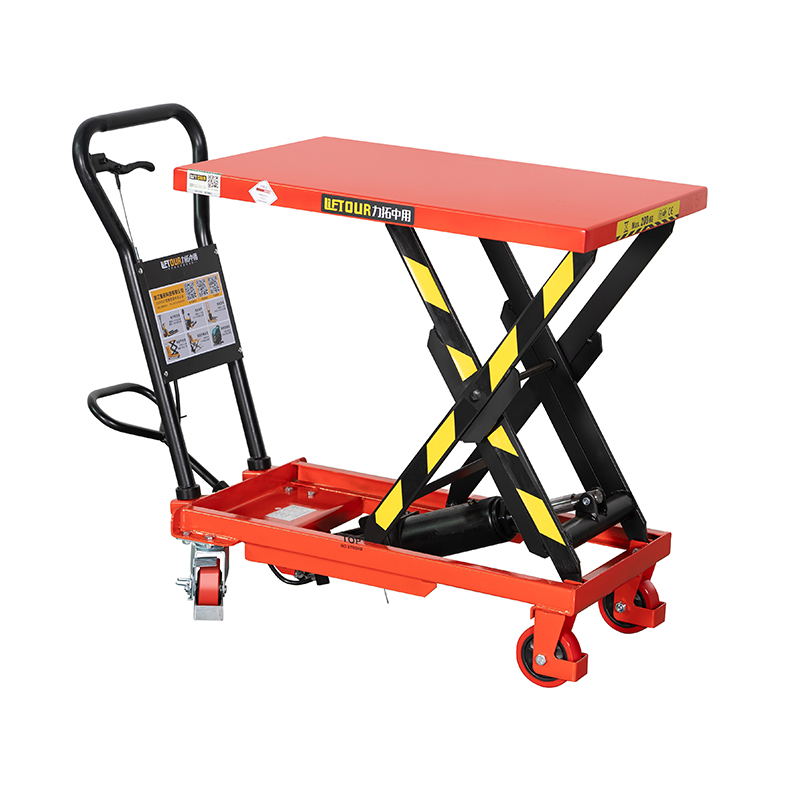 Manual Scissor Lift Platform Truck with Foot Pedal OperationAn affordable manual lift for light, infrequent secondary lifting, with foot-pedal raising, hand-lever lowering, and a durable hydraulic system for stable support.View Product →
It uses the same scissor principle with a manual pump, suiting maintenance platforms, low-traffic mezzanines, and backup dock positions at a fraction of the cost of a fixed unit.
How to Select the Right Fixed Lift Platform
A structured selection process prevents the two most common buying mistakes: undersizing the load capacity and overlooking site constraints. Work through these steps in order.
- Define the heaviest load. Include pallet, product, and any pallet truck used on the deck. Apply a 20 percent margin to reach the minimum rated capacity.
- Measure vertical travel. Record the required lowest and highest deck positions, the ceiling or mezzanine clearance above, and the depth available for a pit if you prefer a flush floor installation.
- Survey the installation site. Check floor flatness and load-bearing capacity, power supply availability, and clearance around the unit for loading and unloading.
- Set safety requirements. In Europe, EN 1570-1 sets safety requirements for vertical lifting tables; in North America, ANSI/ASME B20.1 applies. Ask for a declaration of conformity from the supplier.
- Compare total cost of ownership. Include installation, pit construction, electrical connection, spare parts, and yearly inspection. A cheap machine with weak local support becomes expensive downtime.
Safety is the part of selection that buyers most often underweight. Before installation, review the key safety tips for using a lifting platform and confirm that guards, gates, and emergency stops match the actual job site.
Technical documentation matters: ask for drawings, capacity charts, and component specifications. The lifting platform vehicle brochure lists options that affect price and lead time, so review it before requesting a quote.
Frequently Asked Questions
What load capacity do I need for a fixed lift platform?
Start with the heaviest pallet, add the weight of the handling device on the deck, and add at least 20 percent margin. Most industrial units are rated between 1,000 and 3,000 kg.
Can a fixed lift platform be installed without a pit?
Yes. Surface-mounted models have a low lowered height and work with a small ramp; pit-mounted models sit flush with the floor, which is easier for pallet trucks and forklifts.
What maintenance does a fixed lift platform require?
Check hydraulic oil level, hoses, limit switches, safety valves, and deck condition regularly, and lubricate pivot points per the manual. Have a qualified technician inspect the machine yearly.
Is a lift platform safer than a forklift for vertical transfer?
For fixed-point vertical moves, generally yes. The load rests on a guided platform with safety valves instead of balancing on fork tines over a ramp, and the fixed location keeps pedestrian routes separate.